Songs Nobody Plays Anymore: Inside the Jacksonville Dive Bars Keeping Forgotten Country Alive
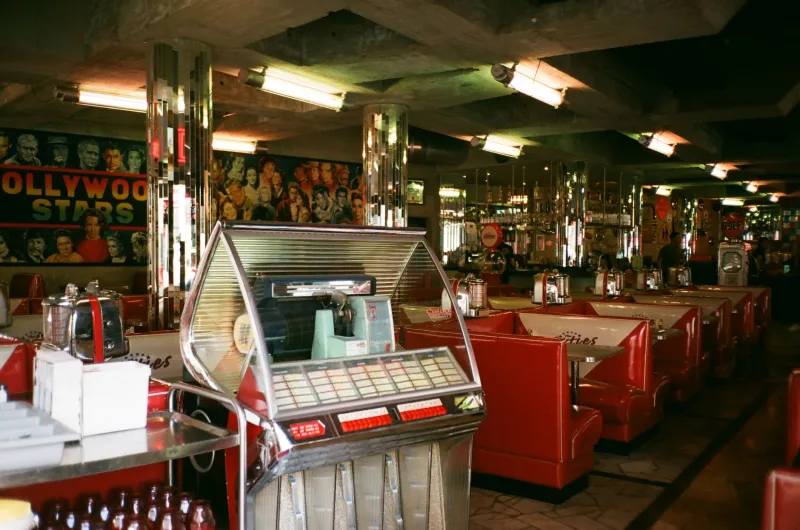
Spend enough time in the right Jacksonville bars and you'll hear things that stop you mid-sip. Not because they're new — they're the opposite of new. You'll hear a voice you don't quite recognize singing a song that sounds like it was written for exactly the kind of night you're having, and you'll think: where has this been all my life?
The answer, in more cases than you'd expect, is: right here. In this room. On this jukebox. Played by people who decided a long time ago that just because the rest of the world forgot something doesn't mean it deserved to be forgotten.
The Algorithm Doesn't Know What It Doesn't Know
Streaming platforms are extraordinary at delivering what's popular. They're built for it. The whole architecture — the playlists, the recommendations, the editorial curation — points toward the center of the bell curve. What gets amplified is what already has momentum. What doesn't have momentum gets buried, and what gets buried tends to stay buried.
For mainstream country music's back catalog, this has been quietly catastrophic. The genre has a deep history full of regional artists, independent releases, B-sides, album cuts, and one-off singles that never charted nationally but meant everything to the people who heard them. These songs don't have enough streaming data to trigger an algorithm. They don't have enough name recognition to land on a curated playlist. They exist in a kind of digital limbo — technically available, practically invisible.
Except in certain Jacksonville bars. Where somebody loaded them into a jukebox and somebody else keeps playing them.
What's Actually in These Machines
The jukeboxes in Jacksonville's classic country holdouts aren't random. They reflect decades of deliberate, sometimes obsessive curation by owners and regulars who take the music seriously enough to argue about it.
You'll find artists on these machines that you won't hear on any radio format in the country. Singers who had regional hits in the late 1960s and early '70s but never broke nationally. Artists from the Bakersfield scene who weren't Buck Owens or Merle Haggard but were genuinely great. Florida country musicians — and there's a whole tradition there that gets overlooked — who recorded for small regional labels that distributed mostly through the Southeast.
"I've got stuff in that machine that I had to track down on original 45s and have transferred," said one Northside bar owner who has been building his jukebox selection for over two decades. "Not because I'm trying to be precious about it. Because it's the best music I've ever heard and I want people to hear it."
He pointed to a Buck White and the Down Home Folks selection, a couple of early Faron Young deep cuts, and a regional Florida artist from the early 1970s whose name he declined to share — protective, in the way that real music people sometimes are, of something they've worked hard to find.
The Songs That Only Live Here
Ask the regulars at these bars about the songs that keep them coming back and you'll get specific, sometimes passionate answers.
There's a particular honky-tonk in the Westside where a specific early 1960s Webb Pierce album cut has developed something of a cult following among the Thursday night crowd. It's not one of Pierce's hits. It's a slow, aching number from the middle of an album that never got much attention even when it was new. But in that room, on that jukebox, it hits differently — and the regulars who know it will tell you the story of the first time they heard it like it was a significant life event.
"I sat down and asked the bartender who that was," said one regular, a retired electrician who's been coming to the same bar for fifteen years. "He looked at me like I'd just asked him what color the sky was. Like it was obvious. That's how I learned about Webb Pierce. Not from any playlist. From a bartender in a dive bar."
That transmission — from jukebox to bartender to patron — is how a lot of country music education actually happens in Jacksonville. It's informal, unstructured, and completely irreplaceable.
The Preservation Argument
There's a legitimate cultural preservation case to be made for what these venues are doing, even if most of the people doing it wouldn't describe it in those terms. They're not archivists in the formal sense. They're just people who love music enough to refuse to let it disappear.
But the effect is archival. When a song only exists in a few physical formats and on a handful of jukeboxes in a specific city, the people maintaining those jukeboxes are, functionally, its custodians. If they stop, the song doesn't disappear from the historical record — but it stops being heard. And music that isn't heard is, in the most practical sense, lost.
"I think about it sometimes," said one bar owner on the Southside. "If I close, what happens to this stuff? Some of it probably ends up in a box somewhere. Some of it maybe gets rediscovered eventually. But the living part of it — the part where somebody hears it for the first time at 11 o'clock on a Friday night and it changes something in them — that part ends."
Why This Matters More Than It Sounds
Classic country's identity is built on specificity. The genre at its best is about real places, real people, real feelings rendered in precise, honest language set to music that doesn't apologize for what it is. That specificity is what gives it its power — and it's exactly what gets smoothed away when a genre gets processed through corporate radio formats and streaming algorithms optimized for mass appeal.
The deep cuts, the forgotten artists, the regional traditions — these are where the specificity lives. They're the parts of the catalog that haven't been sanded down for broad consumption. They're raw and particular and sometimes imperfect and completely alive.
Jacksonville's dive bars, with their stubborn jukeboxes and their opinionated regulars, are the places where that aliveness persists. Not as nostalgia. Not as a novelty. As a living, ongoing practice of taking music seriously enough to keep it in the room.
The next time you're in one of these places and a song comes on that you don't recognize — don't reach for your phone to look it up. Ask the bartender. That's how this has always worked. That's how it should keep working.
Jacksonville's got the songs. It's got the rooms. It's got the people who know the difference between what's popular and what's good.
That's not nothing. That's everything.