Sawdust, Neon, and Steel Guitar: The Honky-Tonks That Made Jacksonville a Country Music Town
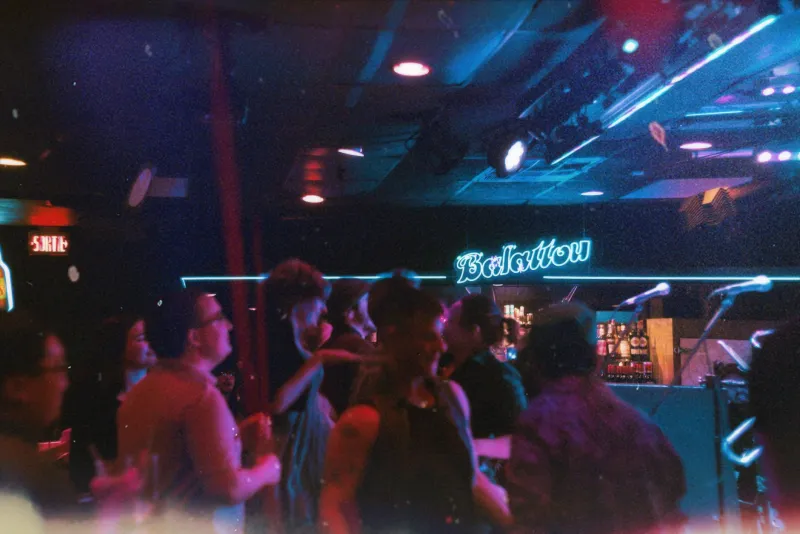
There's a certain kind of building that doesn't exist anymore — not really. You know the type. A low-slung cinderblock structure sitting off a state road, a hand-painted sign out front, a parking lot full of pickup trucks with gun racks and mud on the tires, and from inside, the unmistakable wail of a Telecaster cutting through cigarette smoke and the clinking of longneck bottles. Jacksonville had dozens of them. And for about four decades — from the late 1940s straight through to the mid-1980s — those places were the heartbeat of this city.
We're talking about the honky-tonks. The dance halls. The roadhouses. Call them what you want, but don't you dare call them unimportant.
The Golden Era Nobody Talks About Enough
Most folks know Jacksonville as a football town, a military town, a river city. What gets overlooked — and honestly, it's a shame — is that for a solid thirty-plus years, Jacksonville was one of the most vibrant country music communities in the entire Southeast. Not Nashville. Not Austin. Jacksonville, Florida.
The scene really started cooking in the early 1950s, right when Hank Williams was tearing up the radio and working-class folks across the South were hungry for music that spoke their language. Jacksonville had a massive blue-collar population — shipyard workers, military families, orange grove laborers, truck drivers — and they all needed somewhere to go on a Friday night. The honky-tonks answered that call.
Venues like the Silver Spur Ballroom out on Blanding Boulevard were packing in three hundred people on a weekend night by 1954. The place had a proper stage, a polished hardwood dance floor, and a house band that could play Lefty Frizzell covers tight enough to make you think you were hearing the real thing. Couples two-stepped until their boots gave out. Arguments got settled in the parking lot. Love stories started at the bar. The Silver Spur wasn't just a venue — it was a community center for people who didn't have much use for fancy.
Westside Legends and Northside Nightlife
If you grew up on Jacksonville's Westside in the 1960s, you already know the name The Wagon Wheel. Tucked just off Normandy Boulevard, the Wagon Wheel was the kind of place that regulars treated like a second home — and some of them, honestly, spent more time there than at their actual homes. The ownership family ran the joint with an iron fist and a warm heart, keeping the beer cold, the stage booked, and the trouble minimal.
Local legend holds that a young picker from Orange Park played his first paid gig at the Wagon Wheel sometime around 1963, passing the hat after his set and walking away with $11 and a standing invitation to come back. That kind of story repeated itself dozens of times across Jacksonville's venue circuit. These weren't just bars — they were proving grounds.
Over on the Northside, Dusty's Lounge carved out its own reputation as the place where serious musicians went to get serious. The stage was barely big enough for a four-piece band, the sound system was always one blown speaker away from disaster, and the crowd was not shy about letting you know if you weren't cutting it. But if you could hold your own at Dusty's on a Saturday night, you could play anywhere.
"That crowd would eat you alive if you weren't prepared," recalled one longtime Jacksonville musician who asked to remain unnamed. "But if they liked you — and I mean really liked you — there was no better feeling in the world. They'd be on their feet, hollering, buying you drinks. You felt like Merle Haggard himself."
The Dance Halls of the Southside
Not every venue was a rough-and-tumble roadhouse. Jacksonville's Southside had its own flavor of country entertainment, leaning a little more toward the polished dance hall tradition. The Lone Star Dance Palace, operating through much of the 1970s near the St. Johns River corridor, was known for its live entertainment calendar that brought in regional touring acts alongside local favorites.
The Lone Star held themed nights — Western wear was encouraged, and on certain Saturdays, they'd run square dancing exhibitions that drew families as much as the honky-tonk crowd. It was country music as community event, and it reflected something important about Jacksonville: this wasn't a scene built on cool. It was built on genuine love for the music and the people who made it.
These dance halls also served as unofficial cultural hubs for the waves of Appalachian and Deep South migrants who had relocated to Jacksonville during the postwar boom years. For a family that had moved down from Georgia or Tennessee or the Carolinas, walking into one of these places on a Saturday night felt like coming home. The music, the dancing, the people — it all connected back to something rooted and real.
What Happened to Them
The honest answer is that several forces conspired against the honky-tonk era. The rise of disco in the late 1970s pulled younger audiences away. Suburban development swallowed up the roadhouse corridors. Stricter DUI enforcement changed the calculus for late-night drinking establishments. And the corporatization of country music in the 1980s — the slick, pop-country crossover sound that made Nashville a lot of money and alienated a lot of traditionalists — meant the music itself was changing.
One by one, the old places closed. Some burned down. Some got converted into churches or tire shops or storage units. A few just quietly locked their doors one night and never reopened.
By 1990, most of Jacksonville's classic honky-tonk circuit was gone.
The Legacy That Lingers
Here's what didn't disappear: the musicians those venues trained, the audiences those venues shaped, and the deep-seated love for traditional country music that Jacksonville has never quite let go of. You can still feel it today — at backyard cookouts where someone breaks out a guitar, at local festivals where a crowd three-thousand-strong sings every word of a Waylon Jennings song, at this very radio station, where the classics still get their proper due.
The honky-tonks are gone. But what they built is still standing.
Somewhere in Jacksonville right now, there's probably a kid learning to play Hank Williams on a beat-up acoustic guitar, dreaming about a stage and a crowd that wants to hear something real. Those old venues — the Silver Spur, the Wagon Wheel, Dusty's Lounge, the Lone Star — they planted that seed. And Jacksonville, being Jacksonville, keeps on growing it.
Got memories of Jacksonville's old country music venues? We want to hear from you. Drop us a line at jaxclassiccountry.com — real stories from real people are always welcome here.