Strings of Steel, Hearts of Gold: The Session Players Who Built Jacksonville's Country Sound
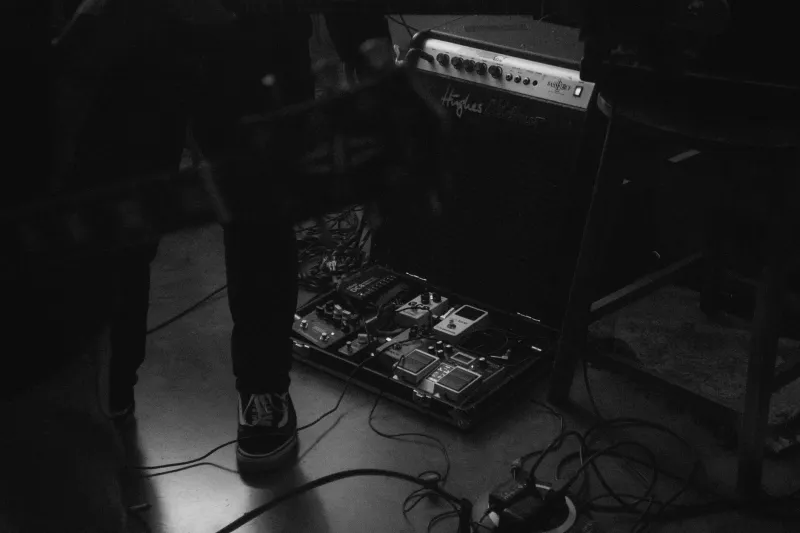
There's a moment in almost every great classic country recording where everything else falls away. The fiddle steps back, the rhythm guitar settles into a groove, and then — right there, sliding through the mix like warm honey — comes the steel guitar. That sound doesn't happen by accident. It happens because somebody spent decades learning how to coax something almost human out of a lap steel or a pedal rig. In Jacksonville, a small but fiercely talented group of those somebodies helped define what classic country actually sounded like from the Florida side of the Mason-Dixon line.
They weren't the names on the marquee. They weren't the ones doing interviews on the radio or headlining the honky-tonks on Beach Boulevard. But if you grew up listening to country music recorded in Jacksonville — or if you ever caught a live show at one of the old venues that packed them in through the '60s, '70s, and '80s — you heard their work. You just didn't know it.
The Studios Where It All Happened
Jacksonville's recording scene has always flown a little under the radar compared to Nashville or Muscle Shoals, but that's part of what made it special. Without the industry pressure and the formula-chasing that could sometimes flatten a Nashville session, Jacksonville's studios had room to breathe. Engineers and players were willing to experiment, to let a take run long, to chase a sound instead of just checking a box.
Places like the old Criteria-affiliated rooms and smaller independent studios scattered across the Northside and Westside became incubators for a regional sound that blended traditional country with just enough Gulf Coast grit to make it unmistakably Floridian. And at the center of that sound, more often than not, was the steel guitar.
Veteran session engineer Ray Holbrook — who spent the better part of three decades behind the board at various Jacksonville facilities — remembers it clearly. "The steel players were always the ones who set the emotional temperature of a track," he says. "A good singer could give you a great performance, but a great steel player could tell you how to feel about it. They were the emotional translators."
The Men Behind the Bar
Among the most respected names in Jacksonville's steel guitar community was a quiet, meticulous player known around the studios simply as "Dub" — a nickname that stuck from his early days playing dance halls in Baker County. Dub came up in the era of the non-pedal lap steel, and even after pedal steel rigs became the industry standard in the '60s, he maintained a reverence for the older technique that gave his playing a distinctly rootsy character.
"Dub could make a pedal steel sound like it was crying," remembers longtime Jacksonville guitarist and session veteran Tommy Crews. "Not weeping — crying. There's a difference. Weeping is dramatic. Crying is real. That's what separated him."
Dub reportedly played on dozens of regional recordings throughout the late '60s and into the '70s, including several sides that got legitimate radio play across the Southeast. He was known for arriving early, staying late, and never once complaining about doing another take. "He treated every session like it might be the last one," says Holbrook. "That kind of dedication — you can hear it in the tracks."
Pedal Steel and the Push Toward Innovation
As the industry shifted and pedal steel rigs became increasingly sophisticated, Jacksonville's players kept pace. The transition wasn't always smooth — some of the older guys resisted the new technology, while younger players embraced it with almost evangelical enthusiasm. But the best of them found ways to honor the tradition while pushing the instrument forward.
One of those players was a woman named Carla Devane, who began sitting in on sessions at a Westside studio in the mid-1970s after years of playing in her family's gospel band. Carla was, by most accounts, one of the most technically gifted steel players the Jacksonville scene ever produced — and one of the least recognized, in part because the session world of that era wasn't exactly rolling out the welcome mat for women.
"She had to prove herself twice as hard every single time," says drummer and session veteran Pete Alvarado, who worked alongside her on numerous recordings. "But once she started playing, nobody questioned anything. The music spoke for itself."
Carla's signature move was a particular combination of knee lever and pedal work that created a shimmering, almost orchestral quality — something engineers struggled to describe but immediately recognized. "It sounded like the whole room was breathing," says Holbrook. "I'd be sitting at the board and the hair would just stand up on my arms."
The Technical Side of the Magic
Part of what made Jacksonville's steel guitar recordings distinctive was the approach taken in the mixing process. Rather than pushing the steel to the back of the mix — a common Nashville practice in certain eras — some of Jacksonville's engineers chose to let it sit more prominently in the midrange, giving it a presence that felt almost conversational.
"We weren't trying to copy Nashville," Holbrook explains. "We had our own ears, our own instincts. And the players we were working with had something to say. It felt wrong to bury that."
The use of certain vintage reverb units — particularly older spring reverb setups — also contributed to the regional character of these recordings. Combined with the natural acoustic properties of some of the older studio rooms, the result was a warmth and depth that digital production has struggled to fully replicate.
Keeping the Legacy Alive
Today, a new generation of Jacksonville players is working to carry that tradition forward. Young musicians are digging into the history, tracking down old recordings, and in some cases seeking out surviving session veterans to learn directly from the source. It's the kind of musical apprenticeship that doesn't happen in classrooms — it happens in garages and living rooms, over coffee and cassette tapes.
For those of us who love classic country, that continuity matters. The steel guitar isn't just an instrument — it's a language, and Jacksonville has some of its most eloquent native speakers. The studios may have changed, the gear has certainly evolved, and some of the old rooms are long gone. But the feeling those players chased? That's still out there, waiting to be found in the right set of hands.
Next time you're listening to a classic country track and that steel guitar slides through the speakers and hits you somewhere deep — take a moment. Somebody gave everything they had to make you feel exactly that way. In Jacksonville, a whole lot of those somebodies never got the credit they deserved.
We're working on changing that.