Dirt Roads and Defiance: How Jacksonville's Renegades Gave Outlaw Country Its Backbone
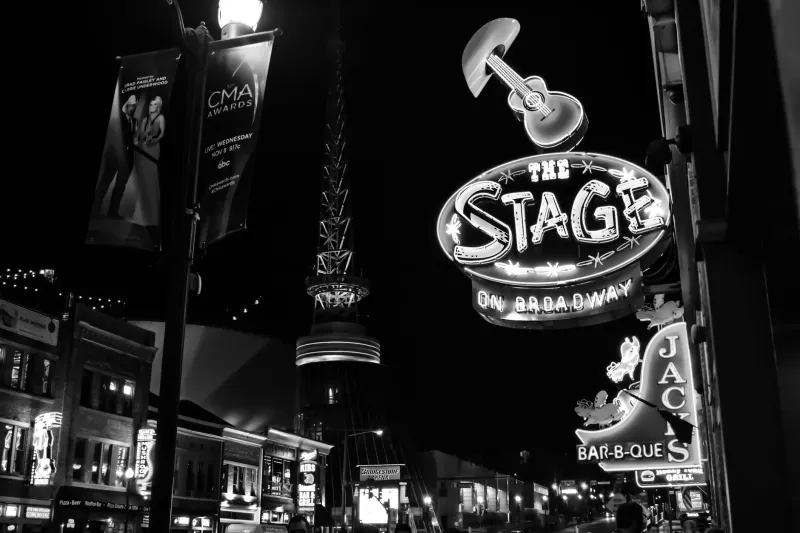
Nashville always got the credit. That's just how the music business works — whoever owns the microphone writes the history. But spend enough time digging through the real story of outlaw country, talking to the people who were actually there, and a different picture starts to emerge. One with a Florida zip code attached to it.
Jacksonville, Florida. Gateway city. River town. Military hub. And for a stretch of years running from the late 1960s through the mid-1980s, one of the most fertile breeding grounds for the kind of country music that Nashville actively didn't want you to hear.
Nashville Had Rules. Jacksonville Didn't Care.
The Nashville Sound of the late '60s and early '70s was slick by design. Producers like Chet Atkins and Owen Bradley had spent years smoothing the rough edges off country music — adding lush string arrangements, polishing away the twang, and crafting a product palatable enough for mainstream radio. It worked commercially. It also drove a generation of musicians absolutely crazy.
The artists who pushed back — Waylon Jennings, Willie Nelson, Kris Kristofferson, Billy Joe Shaver — became the faces of outlaw country. Their names are in every textbook. But the movement wasn't just a Nashville rebellion. It was a nationwide groundswell, and Jacksonville was one of its loudest voices.
"People forget that Florida had this whole separate country music culture," says longtime local music historian and radio personality Dale Cummings, who spent decades spinning records at North Florida stations. "Jacksonville wasn't looking to Nashville for permission. The players down here had their own thing going, and it was raw in a way that Music City just wasn't comfortable with."
That rawness had roots. Jacksonville's music scene in the late '60s was a collision of Southern rock, blues, gospel, and hard-country traditionalism. The city that birthed Lynyrd Skynyrd wasn't just a rock-and-roll town — its working-class neighborhoods and sprawling rural outskirts were soaked in country music. Saturday night dances, roadhouses off US-1, beer joints along Blanding Boulevard. This was the audience that didn't want orchestras behind their heartbreak songs.
The Clubs That Wouldn't Play by the Rules
If you want to understand Jacksonville outlaw country, you have to understand the venues. These weren't polished listening rooms with reserved seating. They were places where the floor was sticky, the cigarette smoke was thick enough to chew, and the bands played until someone unplugged them or the fights got too serious to ignore.
Spots like the Thunderbird Lounge, various Westside honky-tonks, and a rotating cast of roadhouses along the old Dixie Highway circuit gave local musicians a place to develop their sound without a producer in a suit telling them to soften it up. Cover bands were fine, but the crowds responded hardest to originals — especially originals that sounded like they came from somewhere real.
"Those clubs were a finishing school," recalls Jimmy Tate, a Jacksonville-area guitarist who played the circuit for years. "You couldn't fake it in front of those crowds. They'd seen hard times. They wanted music that acknowledged hard times. You played pretty and polished, they'd drink their beer and ignore you. You played honest, they'd shut up and listen."
That demand for honesty pushed Jacksonville musicians toward the same instincts that defined outlaw country nationally — stripped-down arrangements, plainspoken lyrics, tempos that breathed instead of marched. The Telecaster over the steel-string orchestration. The barstool confessional over the radio-friendly chorus.
The Sound That Came Out of It
What distinguished Jacksonville outlaw country from its Texas and Nashville counterparts wasn't just attitude — it was texture. The Southern rock influence was unavoidable. You could hear it in the way rhythm sections locked in harder, the way lead guitar lines occasionally stretched toward the kind of extended phrasing more common to blues than to country. It was country music that had spent time in the same rooms as Duane Allman and didn't come out unchanged.
At the same time, the traditionalist strain ran deep. These weren't musicians trying to cross over or chase rock stardom. The Hank Williams reverence was genuine. The Merle Haggard influence was constant. What they were rejecting wasn't country music's roots — it was the industry's attempt to sand those roots down into something easier to sell.
"Outlaw country, at its core, was about reclaiming authenticity," says Cummings. "And Jacksonville had authenticity to spare. This was a blue-collar town. The people making this music were working jobs during the week and playing shows on weekends. They weren't careerists. They were just people who needed to play."
That economic reality actually reinforced the music's honesty. Without major label contracts dangling overhead, there was no incentive to compromise. You played what you felt. You recorded when you could afford to. And if Nashville never called, well — Jacksonville's honky-tonks would keep the lights on just fine.
Why History Passed Jacksonville By
So why isn't this story better known? Why does every outlaw country retrospective start in Austin or end in Nashville without a stop in Northeast Florida?
Part of it is documentation. The Texas outlaw scene had Willie Nelson's Armadillo World Headquarters and a music press paying close attention. Nashville had its own infrastructure for myth-making. Jacksonville had great music and not enough people writing it down.
Part of it is the nature of regional scenes — they sustain themselves locally, rarely breaking out in ways that attract national attention. The Jacksonville musicians who defined this moment weren't chasing fame in most cases. They were chasing the next Friday night gig.
And part of it, honestly, is that Florida has always been an awkward fit for country music's Southern narrative. The state doesn't fit neatly into the romantic geography of Texas honky-tonks or Appalachian mountain hollers. Jacksonville is Southern in every meaningful cultural sense, but the music industry's storytelling has never quite known what to do with that.
Setting the Record Straight
Here at Jax Classic Country, we think it's past time to correct the ledger. The musicians who played those smoky North Florida clubs weren't footnotes to a story happening somewhere else. They were writing their own chapter — one that deserves to be read.
Outlaw country was never just a Nashville reaction. It was a national reckoning with what country music was supposed to be, who it was supposed to serve, and whether the suits in Music City were ever going to let it be honest again. Jacksonville answered that question the same way it answers most questions — independently, loudly, and without asking permission.
The dirt roads that ran through this city's outskirts, the neon signs buzzing over its roadhouses, the working men and women who packed those clubs on Saturday nights — they all demanded something real. And the musicians who played for them delivered it.
That's outlaw country. That's Jacksonville. And it's about time the history books caught up.