Wax and Wisdom: The Jacksonville Collectors Turning Spare Rooms Into Country Music Shrines
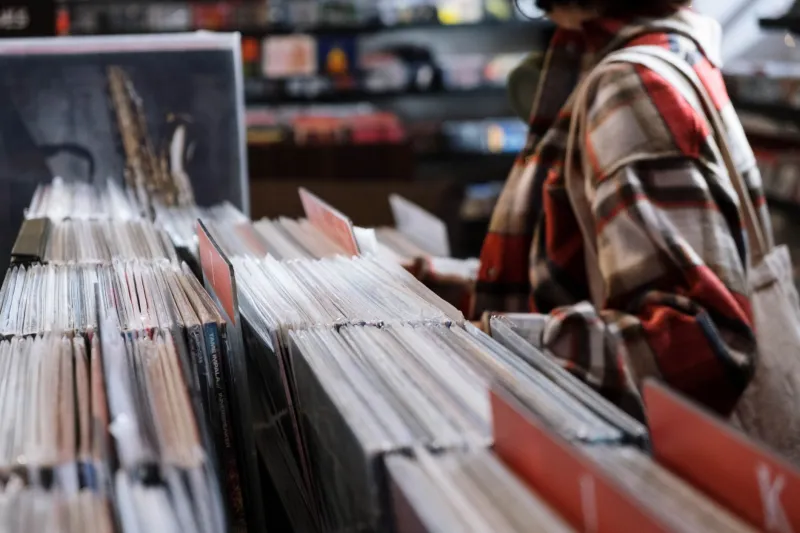
There's a spare bedroom off the hallway in a Westside Jacksonville ranch house that smells like old cardboard and wood polish. Floor-to-ceiling shelving lines every wall. Milk crates crowd the corners. And somewhere in the middle of it all, a turntable sits like an altar, waiting.
This isn't a record store. It's not a museum. It belongs to Dale Hutchins, a retired pipefitter who's been collecting classic country vinyl for going on 34 years. He'll tell you he's got somewhere north of 4,000 records. His wife will tell you it's closer to 5,500. Either way, it's a collection that would embarrass most brick-and-mortar shops still trying to stay open.
"I never set out to build a library," Dale says, pulling a battered copy of Merle Haggard's Okie from Muskogee from a sleeve with the kind of care most people reserve for newborns. "I just kept buying records because I couldn't stop. And then one day I looked around and realized I had something worth protecting."
Dale isn't alone. Across Jacksonville, a quiet but passionate movement of classic country vinyl collectors is doing something streaming platforms never could — preserving the physical, tactile history of American country music in private archives that are equal parts obsession and devotion.
The Hunt Is Half the Religion
Ask any serious collector where the real action happens, and they'll tell you it's not online. It's the estate sales in Arlington. The flea markets out near the Beaches. The church rummage sales in Mandarin where somebody's grandmother donated a stack of Conway Twitty albums she never knew were worth anything.
Susan Merritt, a dental hygienist who runs what she calls her "country room" out of her Avondale home, describes the hunt as something close to a spiritual practice. "You go in not knowing what you'll find," she says. "And then you flip past a dozen records you've already got, and suddenly there it is — something you've been looking for for three years. Your hands actually shake."
Susan's most prized find? A 1961 mono pressing of Patsy Cline's Sentimentally Yours she pulled from a box at an estate sale for two dollars. She had it appraised later. She won't say what it's worth now, but she grins wide enough to answer the question without words.
For these collectors, the value isn't purely financial. It's historical. It's emotional. It's the difference between hearing a song and understanding it — context, era, and all.
What Streaming Can't Touch
Here's something the tech companies don't advertise: when you stream a classic country record, you're not hearing what the artist intended. You're hearing a compressed digital approximation of a sound that was engineered for a specific medium. The warmth, the hiss, the subtle imperfections — those aren't flaws. They're part of the story.
Rick Tanner, who teaches high school history in Orange Park and has been collecting since his early twenties, makes this point with the enthusiasm of a man who's been waiting for someone to ask. "People talk about audio quality like it's a nerd thing," he says. "But it's not. When you put on a Waylon Jennings record from 1973 and hear it the way it was actually recorded, you're hearing something real. Spotify gives you a photograph of a painting. Vinyl gives you the painting."
Rick's collection focuses heavily on the outlaw country era — Waylon, Willie, Kris Kristofferson, Billy Joe Shaver. He's got original pressings, promotional copies, and a few white-label DJ records that never made it to commercial shelves. "Some of this stuff," he says, holding up a sleeve with no artwork, just a stamped catalog number, "I might be one of ten people on earth who has this."
The Community Behind the Collection
What's striking about Jacksonville's collector scene is how social it's become. These aren't solitary hoarders hiding their treasures from the world. They're sharers, teachers, and evangelists.
A loose network of collectors meets informally — sometimes at someone's house, sometimes at one of the few remaining local record shops, occasionally at a bar on the Northside that lets them take over a corner booth and talk shop for hours. They trade duplicates, tip each other off about estate sales, and argue passionately about whether a particular pressing sounds better than a reissue.
"I've learned more about country music history from these people than I ever did from any book," says Carla Voss, a younger collector in her early thirties who got into vinyl after her grandfather left her his record collection when he passed. "Every record has a story. And somebody in this group always knows what it is."
Carla's collection skews toward female artists of the 1960s and '70s — Loretta Lynn, Tammy Wynette, Jean Shepard, Dottie West. She's particularly proud of a complete run of Loretta Lynn's Capitol Records releases in original pressings. "Women kept country music honest during that era," she says firmly. "And they don't get enough credit for it. My collection is partly me making sure that's not forgotten."
Living Museums, No Admission Required
There's an argument to be made — and these collectors will make it enthusiastically — that private archives like theirs serve a cultural function that no streaming service or corporate record label ever will. They're preservation projects. They're living museums where the exhibits actually get played.
Dale Hutchins puts it plainly: "The record companies don't care about the catalog. They care about what's selling right now. But somebody's got to make sure Faron Young and Buck Owens and Hank Snow don't just disappear. That's us. That's what we do."
He's not being dramatic. Plenty of classic country recordings exist today primarily because private collectors kept physical copies alive when labels let masters deteriorate or simply lost them. The history of American music is full of songs that survived because somebody cared enough to keep a record in a sleeve in a climate-controlled room.
For Jacksonville's vinyl faithful, that's not a burden. It's a privilege.
"Every time I play one of these records," Susan Merritt says, setting the needle down on her Patsy Cline pressing as the room fills with something warm and irreplaceable, "I think about all the people who heard this exact record when it was new. And I feel like I'm keeping that alive. That matters to me. That matters a lot."
Out here on the First Coast, where real country music has always found a home, these collectors are doing something quietly extraordinary — one dusty sleeve at a time.