Clear Air, Cloudy Memories: How Jacksonville's Honky-Tonks Are Keeping the Soul Alive After the Smoke Cleared
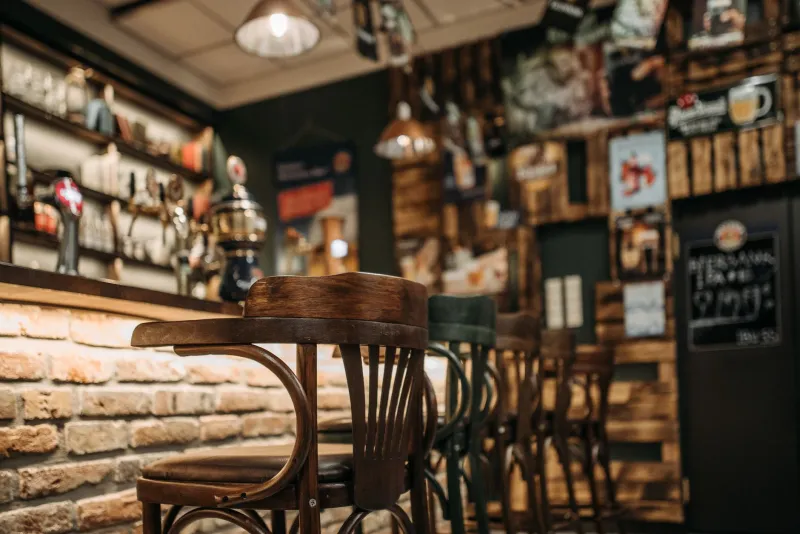
There used to be a particular kind of light inside a Jacksonville honky-tonk. Not the neon glow bouncing off the bar rail, and not the single bulb hanging over the pool table — though those were part of it too. It was the light filtered through a room full of cigarette smoke, hanging thick and blue-gray over the crowd like a second ceiling. You'd walk in off the street, and before your eyes even adjusted, the smell told you exactly where you were.
That smell is mostly gone now. And depending on who you talk to around here, that's either a step forward or a slow amputation of something that can't grow back.
The Law Came Knocking, and Nobody Was Exactly Surprised
Florida's Clean Indoor Air Act has been on the books since 2003, and Jacksonville venues have been navigating its implications ever since. The law bars smoking in enclosed workplaces, which — in practice — means most of the classic country bars that built their reputations on atmosphere as much as music had to make some hard calls. Some scrambled to build outdoor smoking patios. Others quietly lost longtime regulars who'd spent thirty years with a cigarette in one hand and a longneck in the other. A few closed their doors entirely, though nobody will tell you the smoking ban was the only reason.
"It wasn't just about the cigarettes," says one longtime owner of a Westside bar who asked not to be named. "It was about what the cigarettes represented. That was a room full of people who weren't pretending to be somewhere else. They were right there, in that moment, with their problems and their music and their vices. When you take one piece of that out, you're asking everybody to reconsider the whole picture."
That's not a defense of smoking. Most folks we talked to were quick to acknowledge that cleaner air is better for the musicians who play three nights a week and the staff who pour drinks for eight-hour shifts. But there's a difference between acknowledging something is healthier and pretending there's no cultural cost.
What the Haze Was Hiding — And What It Was Holding Together
Ask any working musician who's spent time on a Jacksonville stage what they remember about the old rooms, and somewhere in the first few sentences you'll hear about the smoke. Not always fondly — plenty of players talk about going home with their shirts soaked through and their lungs feeling like wet cardboard — but always specifically. It was part of the sensory contract of the place.
"There's a reason old country records have that particular kind of weight to them," says a guitarist who's been playing North Florida bars since the late 1980s. "Those songs were written and performed in rooms that felt like the world outside didn't exist. The smoke was part of that. It was like the room was sealed off. Now you walk in and you can see all the way to the back wall, and suddenly it feels a little more like everywhere else."
That visibility cuts both ways, though. Several bar owners have noted something unexpected: without the haze, the physical character of their rooms — the hand-painted signs, the vintage beer clocks, the wood paneling worn smooth by decades of shoulders and elbows — is suddenly more visible than it's been in years. Some of that old décor had been half-swallowed by smoke-stained walls and dim lighting. Now it's back in focus.
"I repainted the back wall for the first time in maybe fifteen years," laughs the owner of a Southside spot that's been pouring drinks since the Carter administration. "Turns out there was a mural back there that nobody had really seen in a long time. My regulars thought I'd put it up new. I had to explain it'd been there longer than most of them had."
The Patio Solution and Its Complicated Legacy
The outdoor smoking section has become the default workaround for most Jacksonville venues, and it's created its own subculture. Regulars joke that the patio is where the real conversations happen now — that the honesty that used to live inside the bar has migrated twelve feet to the left, past the back door.
There's something to that. Smoking sections at honky-tonks tend to be stripped-down spaces: a few plastic chairs, a sand-filled bucket, a string of lights if you're lucky. No music, no bartender, no pretense. People go out there to talk, and they talk the way people used to talk inside — directly, without performance.
"I've had more good conversations on that patio than I ever had standing at the bar," admits a regular at one of the Arlington-area spots. "Something about being outside, in the dark, with just a few people — it gets real fast. I don't even smoke anymore, but I still go out there."
The musicians, for their part, have mixed feelings about the split. When the crowd fractures — some inside listening, some outside talking — the energy in the room can drop. A great set needs a full room feeding back into itself. But several performers mentioned that the smoke-free environment has made it easier to actually hear the music, which sounds obvious until you've spent a night in a room where the acoustics were competing with a fogbank.
Holding the Line on Everything Else
What's become clear, talking to the people who run and inhabit Jacksonville's classic country rooms, is that the smoking ban forced a kind of inventory. If the smoke is gone, what else defines this place? What makes a honky-tonk a honky-tonk when you strip away one of its oldest signifiers?
The answers come back pretty consistently: the music, the people, the lack of pretension, and the willingness to sit with hard feelings instead of running from them. Classic country has always been about that — about naming the thing that hurts and giving it a melody. That doesn't require a cigarette to work.
"Hank Williams didn't need the room to be smoky," says one bar owner, almost to herself. "He just needed people who were willing to feel something. That's still here. That part didn't go anywhere."
The haze has cleared. The neon still burns. The steel guitar still aches right on cue. And on a Friday night in Jacksonville, if you find the right room, you can still feel the walls breathing — even if the air inside them is finally clean.
Some things, it turns out, are bigger than the smoke that used to surround them.