Unplugged and Unapologetic: Jacksonville Bars Are Ditching Streaming for the Real Thing
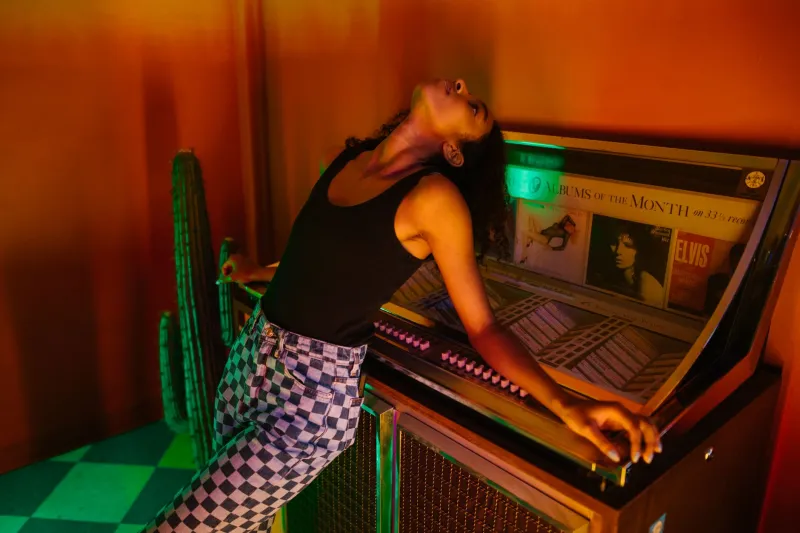
Walk into a handful of Jacksonville's most beloved honky-tonks on any given Friday night and you'll notice something that feels almost radical these days: a jukebox with actual buttons, a turntable spinning a real record, and the unmistakable warm crackle of analog sound filling the room. No playlists. No algorithms. No Spotify-curated "Country Vibes" nonsense sliding Megan Moroney in between Merle Haggard tracks.
This isn't an accident. It's a movement — and it's growing.
Venue owners across Jacksonville are making a deliberate, sometimes costly, and entirely principled decision to walk away from streaming music services and return to physical media. Some are restoring vintage Wurlitzer and Rock-Ola jukeboxes. Others are setting up proper vinyl rigs behind the bar. A few are doing both. And every single one of them has a story about why they finally had enough of handing their music programming over to a corporation that's never once set foot in Florida.
The Money Problem Nobody Talks About Loud Enough
Here's something the streaming industry doesn't exactly advertise: when a bar or restaurant plays music through a service like Spotify, the royalty structure is, to put it charitably, a disaster for the artists. Streaming platforms pay out fractions of a cent per play, and the licensing fees venues pay don't necessarily flow back to the musicians whose work fills those rooms night after night.
Meanwhile, when a Jacksonville bar drops $4,000 on a restored physical jukebox stocked with 45s and classic country albums, that money circulates differently. The records were purchased. The artists got paid at the point of sale — or at least closer to it. The machine itself often comes from a local restoration shop. The economics, imperfect as they are, stay a little more grounded in the real world.
One Westside bar owner who asked not to be named put it plainly: "I was paying a licensing fee every month to play music that paid the artist almost nothing. I was paying a tech company to use a local artist's life's work. That bothered me more and more until I just couldn't do it anymore."
He now runs a restored 1960s jukebox loaded with classic country 45s. His regulars love it. His bar tab averages are up. And he sleeps better.
What Streaming Actually Costs a Room
Beyond the royalty debate, there's a practical argument against streaming that venue owners are only now starting to articulate clearly: streaming flattens the experience.
When Spotify or Apple Music controls the room, the music is technically always on — but it's also somehow never really there. The compression, the shuffle logic, the way an algorithm smooths out the edges to keep every listener from feeling too much of anything — it all adds up to a kind of sonic wallpaper. Functional. Inoffensive. Forgettable.
A vinyl record is the opposite of that. It demands attention. The needle hits the groove, and there's a warmth that digital audio simply cannot replicate — not because of audiophile mythology, but because of physics. The analog signal carries information that compression strips away. You hear it. Your body feels it. And in a room full of people drinking beer and two-stepping, that difference matters more than most people realize until they experience it side by side.
"People stop talking when a good record comes on," said one bartender at a Riverside spot that recently installed a turntable setup. "Not because it's loud. Because it sounds real. You can feel the difference in your chest."
The Corporate Homogenization Problem
The philosophical case against streaming in classic country venues runs even deeper than sound quality or royalty rates. It's about identity — and who gets to define it.
Streaming platforms are built to serve the largest possible audience, which means they're structurally biased toward whatever is most popular right now. The algorithm rewards recency and engagement metrics. It doesn't care about Waylon Jennings' outlaw arc or the way George Jones could break your heart with a single held note. It cares about streams, skips, and session time.
When a Jacksonville venue cedes its music programming to that system, it's not just outsourcing a playlist. It's handing over a piece of its cultural identity to a company whose entire business model depends on making everything sound a little more like everything else.
Physical jukeboxes and vinyl collections don't work that way. They reflect choices — real, human, considered choices made by people who love this music and know this community. Every record in a Jacksonville honky-tonk's collection is a statement. This is what we are. This is what we believe sounds like country music. You don't get that from an algorithm.
The Restoration Economy
There's an unexpected economic ripple effect to all of this that's worth noting. The shift back to physical jukeboxes has quietly created a small but real market for restoration work in Northeast Florida. Technicians who know how to service vintage coin-operated machines — people whose skills seemed headed for extinction not long ago — are finding themselves with more work than they can handle.
Record stores, always fighting for survival, are also seeing a bump from venues looking to stock their jukeboxes and turntables. A few shops in Jacksonville have started offering venue consulting services, helping bar owners build out collections that match their clientele and aesthetic. It's a niche business, but it's real, and it keeps money inside the community.
Not a Perfect Solution, But a Principled One
Nobody involved in this shift is claiming it's without complications. Physical jukeboxes require maintenance. Vinyl gets scratched. The selection is finite by definition. And yes, there are licensing considerations with physical media in commercial settings that aren't always simple to navigate.
But the owners and operators driving this movement aren't looking for perfect. They're looking for honest. They'd rather deal with a skipping record and a repair bill than hand their room's soul over to a platform that treats Hank Williams Sr. as just another data point in a content delivery system.
Jacksonville has always had a stubborn streak when it comes to doing things its own way. This city didn't build its country music reputation by following trends or deferring to whatever Nashville or Silicon Valley decided was appropriate. It built that reputation by being real — real musicians, real venues, real music that meant something to real people.
Dropping the needle instead of opening an app is, in its own small way, an act of that same defiance. And on a Friday night in one of these rooms, with a Merle Haggard 45 crackling through a restored jukebox and a crowd that actually knows the words, it sounds exactly right.