No Feed, No Filter: How Jacksonville's Honky-Tonks Became the Last Rooms Where the Music Chooses You
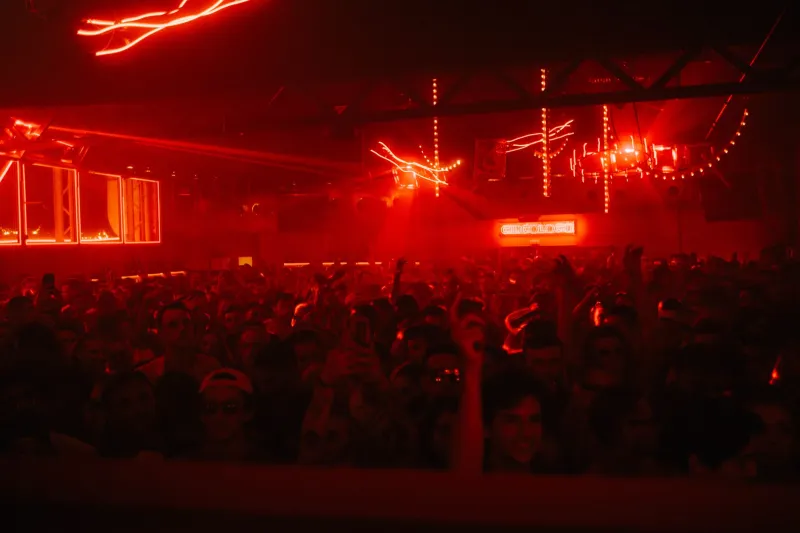
Spotify has 100 million songs. Jacksonville's best classic country bars have a jukebox, a bartender who's been doing this for twenty years, and a live act on Friday nights who learned the repertoire from somebody who learned it from somebody else. Attendance numbers suggest the rooms with less are drawing more people than ever before.
This is not a coincidence.
The Problem With Infinite Choice
Streaming platforms sold us the idea that more is always better. More songs, more artists, more personalization, more data-driven recommendations calibrated to your listening history down to the last fraction of a second. The pitch was liberation—never be without the perfect song for the perfect moment again.
What nobody talked about much was what gets lost when music becomes frictionless and infinite. When there's no scarcity, there's no discovery. When an algorithm decides what you hear next based on what you've already heard, you never get surprised. You never sit in a room and have a song you've never encountered before stop you mid-sentence because it's saying something you needed to hear.
Jacksonville's classic country venues have, largely by instinct and partly by philosophy, preserved that experience. Not because they're Luddites or because they're running some kind of calculated nostalgia play. But because the people who run these rooms have always understood something that Silicon Valley spent billions of dollars to figure out and still got wrong: music is a communal experience, and communities need human beings to curate them.
"An algorithm doesn't know this room," says one westside bar owner who has been in the same location for close to two decades. "It doesn't know what happened here last Tuesday. It doesn't know who just walked in or what they need. I do. My bartender does. That's the difference."
What the Numbers Are Saying
Anecdotal evidence from Jacksonville venue owners paints a consistent picture. Several bars and honky-tonks that program exclusively classic country—and that have deliberately avoided streaming-integrated jukebox systems—report that their Friday and Saturday night covers have held steady or increased over the past three years, even as the broader entertainment landscape has fragmented.
One venue owner, who asked not to be identified by name, shared that her average Friday night headcount has grown roughly 20 percent since 2021, a period when she also made the decision to stop offering a streaming-connected digital jukebox and return to a curated physical playlist. She attributes the change directly to the programming shift.
"People want to be somewhere," she says. "They spend all week staring at screens that are trying to predict what they want. When they come in here on a Friday night, they want something that doesn't know them yet. They want to be surprised."
Live music attendance tells a similar story. Several Jacksonville venues that feature weekly classic country acts report consistent crowds that skew, interestingly, younger than the genre's traditional demographic might suggest. The thirty-and-under contingent, many of whom grew up with streaming as their primary music delivery system, are showing up to hear live sets built around material from the 1960s through the 1980s. They're not doing it out of ironic detachment. They're doing it because they like it.
This tracks with national data. According to the National Independent Venue Association, live music attendance at smaller independent venues has rebounded strongly post-pandemic, with audiences citing "authenticity" and "community" as primary reasons for choosing live venues over home streaming. Jacksonville's classic country rooms are a specific local expression of a broader cultural hunger.
Human Curation as a Radical Act
In the current entertainment environment, choosing what music plays in a room is a more significant decision than it sounds. Every streaming platform, every algorithm-driven service, every digital jukebox connected to the internet is making that choice based on data—play counts, skip rates, demographic profiling, regional listening trends. The human element has been steadily removed from the equation in the name of efficiency and scale.
Jacksonville's classic country bartenders, venue owners, and live acts are, in a very real sense, performing an act of resistance every time they decide what goes on the turntable or what goes into the set list. They're asserting that music selection is a form of hospitality, not a logistics problem to be optimized.
"I think about what's going to feel right in this room at 9 o'clock on a Saturday," says a musician who has been playing Jacksonville venues for more than a decade. "That's not something you can put in a spreadsheet. You read the room. You play what the room needs. Sometimes that means you skip the song you were planning to play because the energy shifted. No algorithm does that."
This kind of responsiveness—the ability to adjust in real time to the emotional temperature of a live audience—is precisely what streaming cannot replicate. And it's a significant part of why rooms that offer it are drawing people who have access to every song ever recorded on the device in their pocket but still choose to drive across town and pay a cover charge.
The Jacksonville Difference
Jacksonville has always had a particular relationship with country music. This is a working city with working-class roots, a city where the country tradition was never just a radio format but a cultural inheritance passed down through families and neighborhoods and church parking lots and Friday night honky-tonks. The music here has always meant something specific and local.
That specificity is part of what makes Jacksonville's classic country scene resistant to the homogenizing pressures of algorithm culture. The rooms that have survived and grown aren't trying to appeal to a national demographic. They're trying to serve a local community that has a clear sense of what it wants and why it wants it.
"People here know the difference," says a longtime regular at one of the city's most established classic country venues. "They've been coming to rooms like this their whole lives. They know what it feels like when the music is right. And they know when it isn't."
That discernment—built over generations of genuine engagement with the music—is exactly what an algorithm cannot replicate, because it can't be quantified. It lives in the room, in the people, in the accumulated memory of every song that's ever meant something in a place like this.
Why This Matters Beyond Jacksonville
What's happening in Jacksonville's classic country venues is a small-scale version of something the broader culture is slowly beginning to reckon with: the limits of algorithmic curation and the enduring human need for music that comes from somewhere real.
Streaming will not disappear. Digital platforms will continue to dominate how most people consume music most of the time. That's the reality, and nobody in Jacksonville's classic country community is pretending otherwise.
But the rooms that are filling up on Friday nights, the jukeboxes that haven't been connected to a server, the bartenders who know exactly what to play at exactly the right moment—these things are telling us something important. They're telling us that efficiency isn't the only thing people want from music. That surprise matters. That community matters. That being in a room where a human being made a thoughtful choice about what you're going to hear tonight matters more than having access to everything.
Jacksonville figured that out a long time ago. The rest of the country is just starting to catch up.