Holding the Line: The Jacksonville Venue Owners Refusing to Let Classic Country's Last Stages Go Dark
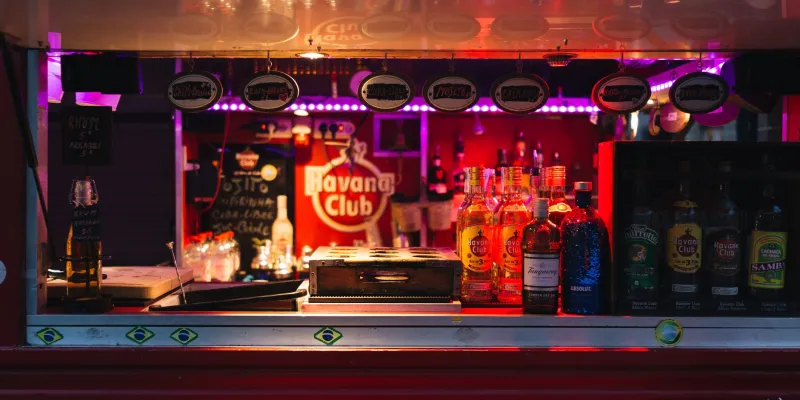
There's a particular kind of quiet that falls over a honky-tonk on a Tuesday afternoon. The stools are empty, the jukebox is dark, and the only sound is maybe the hum of a beer cooler doing its job. It's the kind of quiet that lets you notice things — the scuff marks on the dance floor worn down by decades of two-stepping boots, the water stains on the ceiling that have their own history, the framed photographs of artists who played here back when this neighborhood looked nothing like it does today.
For a growing number of Jacksonville's classic country venue owners, that quiet isn't peaceful anymore. It's a warning.
The Economics of a Dying Dance Floor
Jacksonville has changed fast. The city's ongoing development push — new apartment complexes, mixed-use retail corridors, boutique coffee shops moving into blocks that once belonged to tire shops and bait stores — has been good news for a lot of people. But for the owners of the honky-tonks and classic country bars that have anchored certain neighborhoods for thirty, forty, sometimes fifty years, the math has gotten brutal.
Property taxes are climbing. Rents on leased buildings are jumping at renewal time. Neighboring developments bring new residents who didn't grow up with live music and cold beer as weekend anchors — and sometimes those new neighbors have lawyers.
"I got a noise complaint last spring from a building that didn't exist three years ago," said one Westside venue owner who asked not to be named while a lease negotiation is still ongoing. "We've been here since 1987. The condos showed up in 2022. You tell me who moved into whose neighborhood."
It's a complaint echoed across the city's remaining classic country spots. The venues that survived the smoking bans, the recession, the pandemic, and the slow creep of streaming culture are now facing something that feels more existential — the simple arithmetic of a city that has decided their square footage is worth more than their history.
What These Rooms Actually Are
It's easy to look at a honky-tonk from the outside and see a bar. What you miss from that angle is everything else it is.
For a lot of Jacksonville's working-class communities, these venues have functioned as social infrastructure for generations. They're where people gathered after funerals and after weddings. Where a laid-off plant worker could sit at a bar, hear Merle Haggard on the jukebox, and feel like somebody understood his week. Where young musicians got their first real stage time in front of an audience that wasn't their friends and family.
"This room has seen three generations of some families," said one owner of a Northside institution that's been in operation since the mid-1970s. "I've got regulars whose grandparents used to come in here. That's not a bar. That's a community center with a liquor license."
The cultural weight these spaces carry doesn't show up on a balance sheet, which is part of the problem. When a developer looks at a parcel, they don't see the social fabric. They see the square footage.
The Strategies Keeping Some Doors Open
Not everyone is losing the fight. Some owners have found creative ways to adapt without gutting what makes their venues worth saving.
A handful of Jacksonville's classic country spots have leaned harder into their identity as live music destinations, booking more acts and positioning themselves as experiences that streaming can't replicate. Others have started hosting private events — birthday parties, retirement gatherings, anniversary dinners — using the venue's authentic character as a selling point in a city full of generic event spaces.
One owner on the Southside has started running themed nights built around specific eras and artists — a Waylon Wednesday here, a Bakersfield Sound Saturday there — events that draw both longtime regulars and curious newcomers who didn't grow up in the culture but are hungry for something real.
"You can't just open the doors and expect people to show up anymore," she said. "You have to give them a reason. But you can't compromise on what you are. The minute you start playing whatever's on the charts to chase a younger crowd, you've already lost."
That tension — between survival and integrity — runs through every conversation with Jacksonville's venue owners. There are things they'll do to stay open and things they won't. The ones who've been in this the longest seem to draw that line pretty clearly.
The Fear Underneath It All
Ask any of these owners what keeps them up at night and the answers aren't really about money. The money is the symptom. The fear is something deeper.
"What happens to the music if the rooms disappear?" asked the Westside owner. "I'm not talking about streaming or Spotify or whatever. I'm talking about the living thing. The guy who's been playing pedal steel for forty years and still gets up on a Thursday night in front of twenty people because it matters to him. Where does he go?"
It's a legitimate question. Classic country as a living, breathing performance tradition — not a nostalgia product, not a museum exhibit, but an actual ongoing practice — depends on venues like these. Without the rooms, the musicians lose their stages. Without the stages, the tradition stops transmitting. Without the transmission, you've got history instead of culture.
Jacksonville has spent decades building a legitimate claim to being a real country music town. The artists who came through, the musicians who stayed, the audiences who showed up week after week — that didn't happen by accident. It happened because there were places for it to happen.
What Gets Lost When the Lights Go Out
The city has lost venues before. It'll lose more. That's the nature of things, and nobody who's been in this business long enough is naive about it. But there's a difference between a venue closing because its time has passed and a venue closing because the rent got jacked up by a landlord who's selling to a developer who's going to put in another apartment complex with a rooftop bar that plays curated playlists.
One veteran owner put it simply: "When this place closes — and maybe it does, I don't know — I want it to close because we ran out of road, not because somebody decided our block was worth more money than our history."
For now, the lights are still on. The dance floors are still scuffed. The jukeboxes are still loaded.
Jacksonville's classic country venues are holding the line. Whether the line holds is a question the whole city has a stake in answering.