Coins, Chrome, and Conviction: The Jacksonville Venues Holding the Line Against Digital Jukeboxes
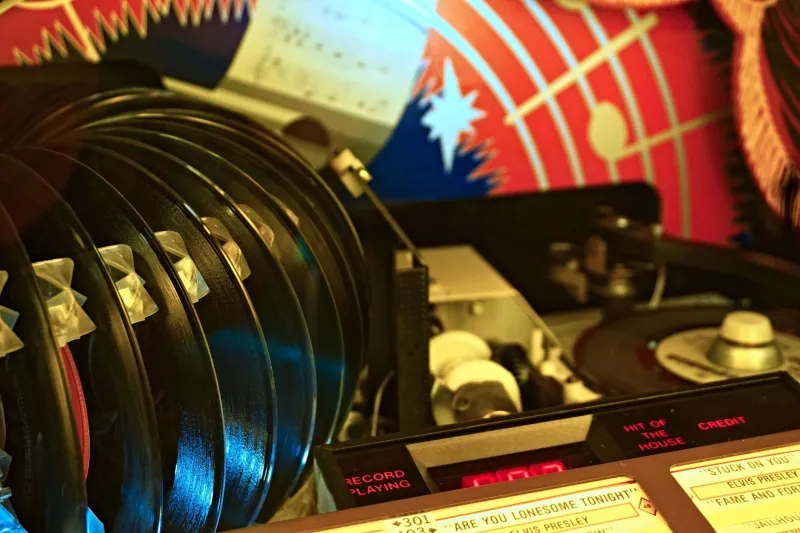
There's a particular sound a quarter makes when it drops into a jukebox. Not the digital ping of a touchscreen app, not the hollow click of a smartphone confirming your playlist selection — a real, weighted, metallic clink that travels through the machine's housing and out into the room. If you've heard it lately, chances are you were standing inside one of Jacksonville's last true honky-tonks, where the owners have made a choice that's becoming rarer by the year: keep the analog machine, lose the algorithm.
It's a decision that looks eccentric from the outside. Digital jukeboxes offer tens of millions of songs, remote management, and revenue-sharing models that sound attractive on paper. Streaming services will fill a room with music for next to nothing per month. So why are certain Jacksonville venues still nursing physical jukeboxes, sourcing replacement parts from suppliers who are themselves becoming hard to find, and turning away upgrade pitches from digital entertainment companies?
The answer, depending on who you ask, is economics, identity, or something closer to faith.
What You Actually Lose When You Go Digital
Ask any regular at a classic country bar what changes when the physical jukebox disappears, and most of them won't talk about sound quality first. They'll talk about control.
A digital jukebox connected to a streaming library is, at its core, an open door. It lets in everything — and in a classic country venue, everything is the enemy of something. The whole point of a honky-tonk jukebox isn't access to a universe of music. It's access to the right music, curated deliberately, stocked with intention. When a venue owner loads a physical machine, they're making editorial decisions. Hank Williams goes in. The current crop of bro-country chart-toppers does not. That's not gatekeeping — that's curation, and there's a meaningful difference.
Digital services blur that line fast. Even platforms that allow custom libraries tend to drift. Sponsored content creeps in. "You might also like" suggestions surface tracks that have no business playing between a Merle Haggard deep cut and a Patsy Cline B-side. And once a venue opens that door, regulars notice. The room changes. The conversation changes. The whole vibe shifts in ways that are hard to articulate but impossible to ignore.
"You can feel it when the music doesn't belong," said one longtime patron at a Westside Jacksonville bar that's operated the same Seeburg unit since the early 1980s. "The room gets a little uncomfortable. People stop singing along. It's subtle, but it's real."
The Economics Nobody Talks About
Here's the part that surprises people who assume physical jukeboxes are just sentimental relics: for certain venues, they're still financially competitive.
A well-maintained physical machine in a busy bar generates consistent coin revenue with no monthly licensing fees eating into the margin. Digital jukebox companies typically take a percentage of earnings and charge ongoing service fees. Streaming subscriptions add another line item. For a small venue operating on tight margins — which describes most of Jacksonville's authentic honky-tonks — those costs compound quickly.
Maintenance on a physical machine isn't free, obviously. Parts are harder to source than they used to be, and the technicians who know how to service vintage units are a shrinking population. But several Jacksonville venue owners have quietly built relationships with those technicians, some of whom drive in from surrounding counties, because they've decided the tradeoff is worth it.
One owner, who asked not to be named because he finds the whole conversation a little exhausting, put it plainly: "I know exactly what my machine costs me. I know exactly what it makes me. With the digital stuff, there's always another fee, always another update, always somebody's hand in your pocket. I'd rather deal with a broken belt than a new contract."
A Room That Knows Itself
There's a sociological dimension to the physical jukebox that doesn't show up in any revenue report. When a patron walks up to a machine, flips through the selections, and makes a choice, they're participating in the room. They're communicating with the other people in that space — announcing something about their mood, their taste, their understanding of the moment. The person who plays George Jones at 9 PM on a Tuesday is making a different statement than the person who plays it at 1 AM on a Saturday, and everyone in the bar understands that without it needing to be explained.
Digital systems flatten that dynamic. Remote queuing — the ability to select songs from a smartphone app without even approaching the machine — removes the social ritual entirely. There's no walk across the room, no moment of standing at the machine while someone leans over your shoulder to see what you're picking, no negotiation between patrons about whose song plays next. The interaction disappears, and with it goes a small but real thread of human connection.
Jacksonville's holdout venues understand this, even if they don't always have the vocabulary for it. They know that their jukebox isn't just a music delivery system. It's a social object, a gathering point, a low-stakes arena for the kind of communal decision-making that doesn't happen anywhere else in most people's lives.
Holding the Line in a City That's Changing
Jacksonville is growing. New neighborhoods, new venues, new residents who didn't grow up with classic country as the soundtrack to their weekends. That growth brings opportunity, but it also brings pressure — pressure to modernize, to broaden appeal, to compete with the kind of slick entertainment options that newer establishments offer.
The honky-tonks holding onto their physical jukeboxes are, in a sense, making a bet that there's a Jacksonville audience that doesn't want what's new. That there are enough people — locals, transplants who grew up country somewhere else, younger listeners who've discovered the old stuff and found it more honest than anything on today's charts — to fill a room built around intentional music selection.
So far, at least in the corners of this city where the neon still flickers and the beer is cold and the Hank comes out of a machine that weighs three hundred pounds and doesn't need a WiFi password, that bet is paying off.
The last jukebox standing isn't standing by accident. It's standing because somebody decided it was worth fighting for — and because a city like Jacksonville, with the country music history it carries, still knows the difference between a song that belongs in the room and one that's just passing through.