Why No Algorithm on Earth Can Tell a Jacksonville Honky-Tonk What to Play
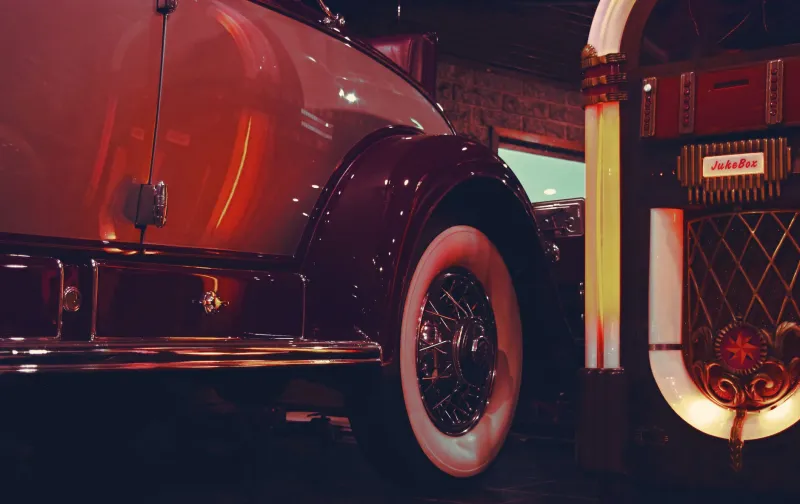
There's a moment that happens in every real honky-tonk in Jacksonville. Someone walks up to the jukebox, punches in a number, and before the first note even lands, half the bar already knows what's coming. Heads turn. Somebody sets down their beer. A woman in the back closes her eyes. That's not a recommendation engine at work. That's memory. That's shared history. That's something a machine will never replicate no matter how many data points it swallows.
Streaming platforms have gotten awfully confident lately. Spotify, Apple Music, Amazon — they'll all tell you they know exactly what you want to hear based on your listening habits, your location, the time of day, even the weather outside. And maybe that works fine if you're looking for background noise on a Tuesday afternoon commute. But inside a Jacksonville bar at nine o'clock on a Friday night, those algorithms aren't just wrong — they're almost insulting.
The Problem With Letting a Computer Pick the Mood
We spent a few evenings talking to regulars at some of Jacksonville's most beloved classic country haunts, and the same frustration came up over and over again. People aren't just tired of the algorithm pushing the same forty songs on a loop. They're tired of being misunderstood.
"I pulled up one of those 'Classic Country' playlists on my phone the other night and it gave me three Shania Twain songs in a row," said one regular at a Westside bar who's been coming in since the mid-1980s. "Now I don't have anything against Shania, but that's not what I walked in here for. I wanted Merle. I wanted something that actually meant something."
That word — meaning — came up constantly. And it points to the fundamental flaw in how algorithms approach music selection. They measure behavior, not feeling. They track what people click on, not why they needed to hear it. Classic country, more than almost any other genre, is built on emotional specificity. A Lefty Frizzell song hits different after a long week. A Don Williams ballad lands in a completely different place at last call than it does at happy hour. An algorithm doesn't know what kind of week you had. A good bartender does.
The Deep Cuts Nobody's Recommending
Ask a Jacksonville country fan about their most-requested songs and you won't hear the usual suspects. Sure, Hank Williams and George Jones get their due, but the requests that really light up a room tend to be the ones streaming services have essentially buried.
Names like Faron Young, Stoney Edwards, Moe Bandy, and Dottie West came up repeatedly in our conversations. Songs that charted once in 1974 and then got swallowed by time — tracks that a certain generation holds close to their chest like a private inheritance. "Nobody's algorithm is going to recommend 'She's All I Got' by Freddie North," laughed one longtime patron. "But you play that in here on a slow Wednesday and I guarantee you three people are going to stop mid-conversation."
That's the thing about deep cuts. They're not obscure because they're bad. They're obscure because the music industry moved on and the streaming platforms followed the money. But the fans didn't move on. They kept those songs alive in their heads, on their old cassettes, in their memories of specific nights in specific places.
Jacksonville has always been a city that holds onto things worth keeping. That's not nostalgia for its own sake — it's a genuine understanding that some things were built better the first time around.
Human Curation Isn't a Trend, It's a Tradition
What the algorithm crowd doesn't understand is that music selection in a real bar isn't a passive experience. It's a conversation. The person behind the jukebox or behind the bar is reading the room constantly — adjusting the energy, knowing when to bring it up and when to let it breathe. That's a skill that takes years to develop and can't be coded.
"I can tell within about ten minutes of a crowd walking in what kind of night it's going to be," said one bartender who's worked the same spot on the Southside for going on twelve years. "And I'm going to pick the music accordingly. Sometimes people need something rowdy. Sometimes they need something that's going to make them feel like everything's going to be okay. A computer doesn't know the difference."
This is why the best classic country venues in Jacksonville still treat music selection as a curatorial art form. The jukebox isn't just a machine — it's a confessional booth. People make requests because they need to hear something, not just because they want to. There's a difference, and it matters enormously.
The bartenders and regulars who understand this have developed a kind of unspoken vocabulary. A request for a certain Webb Pierce song might mean someone just got some hard news. A Buck Owens track at the right moment can turn a tired crowd into something alive. These are judgment calls that require empathy, experience, and genuine love for the music — none of which can be replicated by a recommendation engine.
What Jacksonville Gets Right That Silicon Valley Doesn't
Here's the thing that tech companies consistently fail to grasp about markets like Jacksonville: the relationship between this city and classic country music isn't transactional. It's not about consumption. It's about identity. People here don't stream Waylon Jennings because an algorithm told them they might like it. They play Waylon because Waylon sounds like something true.
The platforms are built around the idea that taste is predictive — that if you liked this, you'll like that. But classic country fans operate on a different logic entirely. They don't just want something similar. They want something real. And real is a quality that doesn't show up in metadata.
A few of the venues we visited have pushed back against the streaming-playlist model entirely, investing in proper jukeboxes stocked with intentional selections, or relying on staff with genuine knowledge to control the music. The feedback from regulars has been overwhelmingly positive. People notice when someone actually cares about what's playing.
"I'd rather hear a scratchy 45 of Tammy Wynette than a perfectly streamed song that some algorithm decided I should probably like," one woman told us, nursing a longneck near the pool tables. "There's no algorithm for heartache. There's no algorithm for what a song does to you when you really need it."
She's right. And until someone figures out how to code thirty years of living into a recommendation engine, Jacksonville's honky-tonks are going to keep doing it the old-fashioned way — with real people, real judgment, and real music that means something.
That's not a bug in the system. That's the whole point.