Second Chances on the Turntable: The Forgotten Country Records Jacksonville Brought Back from the Edge
The music industry has always been comfortable with the idea of a one-hit wonder. It's a clean narrative—one bright flash, then darkness. What that narrative ignores is everything that happens after the darkness, in the rooms and on the stations where songs outlast their commercial moment and find the audiences they were always meant to reach.
Jacksonville has been that room for a remarkable number of country records that didn't get a fair shake the first time around. Through a combination of dedicated DJs, stubborn bartenders with killer jukebox instincts, and venue owners who trust their ears more than the charts, this city has quietly become a sanctuary for forgotten country music—a place where songs get to try again.
The Record That Wouldn't Stay Dead
In the mid-1970s, a Texas singer named Gary Stewart put out a string of records that should have made him a permanent fixture in the country music conversation. His voice was unlike anything else on the radio—raw, slightly dangerous, built for songs about the kind of nights that don't end well. "She's Actin' Single (I'm Drinkin' Doubles)" gave him a number-one hit and a moment of real national attention. Then the moment passed.
Stewart's deeper catalog—the album cuts, the follow-up singles that didn't quite break through, the honky-tonk gems buried on B-sides—largely vanished from mainstream rotation. But in Jacksonville, those records never really left. Local DJs who had grown up hearing Stewart's voice coming out of their parents' car radios kept pulling his records and putting them back in the stack. Bartenders who knew their rooms stocked jukeboxes with his lesser-known tracks. Over time, a generation of Jacksonville listeners who were too young to have heard Stewart the first time around discovered him through these channels and fell hard.
Today, a Gary Stewart deep cut landing in a Jacksonville bar at the right moment is enough to stop conversations mid-sentence. That's not nostalgia. That's a song finding its people.
Overlooked by Design, Rescued by Loyalty
Moe Bandy's story follows a similar arc. In the late 1970s and early 1980s, Bandy was putting out some of the most honest honky-tonk music Nashville had seen in years—blue-collar, specific, emotionally direct in a way that the industry's move toward slicker production was already starting to crowd out. He had genuine hits, but his catalog is deep enough that plenty of his best work never got the attention it deserved.
Jacksonville's classic country community caught on to what the mainstream missed. Certain Bandy tracks became fixtures in local venues not because anyone was making a curatorial statement, but because the songs simply worked—they fit the rooms, they fit the hours, they fit the particular kind of feeling that Jacksonville's honky-tonk faithful came out to find. Word spread the way it always does in tight-knit music communities: one person told another, someone put a record on, the room responded.
That organic process of rediscovery is something no streaming algorithm can replicate. Algorithms surface what's popular. Jacksonville surfaces what's true.
The Women Who Got Left Behind
If there's a pattern in the songs Jacksonville has rescued, it runs hardest through the work of female country artists who were never given the full credit they were owed. The industry has always had a complicated relationship with women in country music—embracing them when convenient, sidelining them when the next trend came along.
Artists like Dottie West, whose catalog stretches far beyond the duets that kept her name in circulation, have found renewed appreciation in Jacksonville venues where DJs willing to do the digging have put her solo work back in front of audiences who respond with genuine surprise. "How'd I never hear this before?" is a question that gets asked a lot in these rooms, and the honest answer is usually some version of: because nobody played it for you.
The same goes for Norma Jean, who spent years as a fixture on the Porter Wagoner Show and built a catalog of sharp, independent-minded country records that fell through the cracks when her public profile faded. Jacksonville's classic country radio stations have been among the handful of outlets anywhere in the country that still reach for her records with regularity—not as a historical curiosity, but as music that holds up completely on its own terms.
How the Rescue Actually Happens
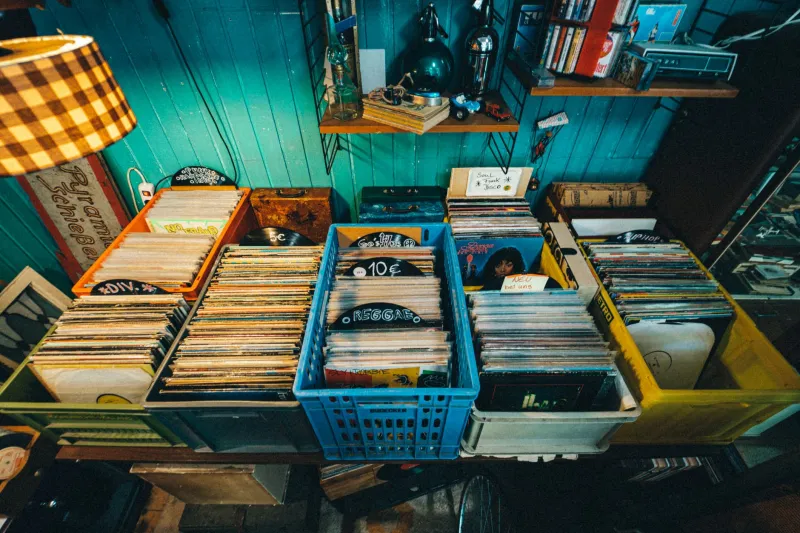
The mechanism by which Jacksonville saves these songs is less dramatic than it might sound. There's no formal organization, no committee, no grant-funded preservation effort. It happens in the stacks of records that DJs carry into the booth. It happens when a bartender at a place that's been open since 1987 decides that tonight feels like a Bobby Bare night and puts on an album cut that nobody's heard in thirty years. It happens when a venue owner who's been collecting 45s since the Carter administration slips one into the jukebox rotation just to see if anybody bites.
Somebody always bites. That's the thing about a genuinely good song—it doesn't need context or explanation. It just needs to be played loud enough for the right person to hear it.
What Gets Saved and What Gets Lost
For every song that Jacksonville has managed to pull back from the edge, there are others that haven't been so lucky. Records that existed in too few copies, artists whose work was never properly archived, songs that were pressed in small regional runs and simply didn't survive in enough quantity to circulate. The losses are real, and the people doing this work are aware of them.
But the wins matter too. Every time a Jacksonville DJ drops a forgotten gem into a set and the room shifts—when you can feel the collective attention sharpening, when someone at the bar grabs their friend's arm and says listen to this—that's a song getting its second chance. That's the work, and it's worth doing.
Some music was never meant to be a one-hit wonder. It was just waiting for the right city to figure that out.