The Night the Music Stopped Everything: Jacksonville Residents on the Classic Country Moments That Rewrote Their Lives
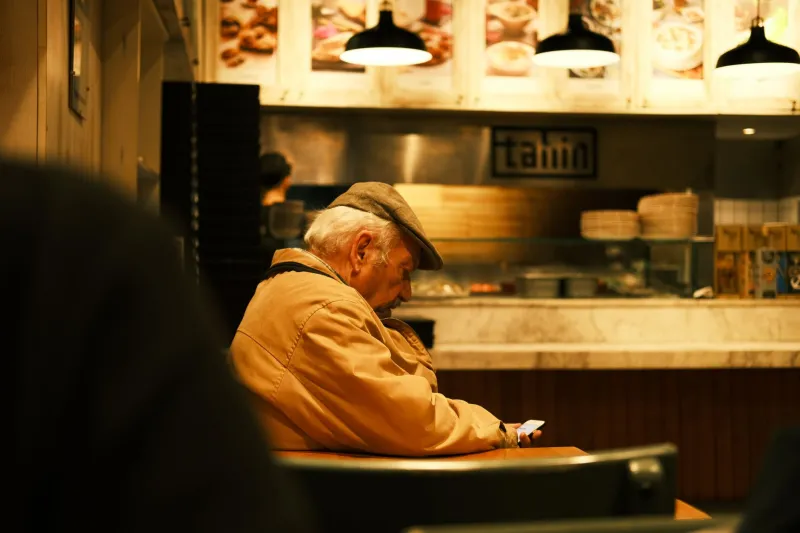
Nobody walks into a bar expecting their life to shift. You go in because you're thirsty, or tired, or avoiding something at home, or just because the parking was easy. You sit down, you order something, and then — sometimes — a song comes out of a jukebox or off a stage and lands on you in a way you weren't prepared for.
Classic country music has always been particularly good at that. There's something in the directness of it, the refusal to be subtle when subtlety would be easier, that catches people off guard. We asked around Jacksonville — at bars, at record shops, at the kind of places where people still talk to strangers — and collected some of those stories. The ones below are real. The details belong to people who were kind enough to share them.
"I Hadn't Cried in Four Years"
Darrell works the early shift at a logistics company near the port. He's the kind of guy who describes himself as not much of a talker, which made it notable when he sat down and offered this without much prompting.
"My dad passed in 2019. We weren't close toward the end — his choice, not mine — and I didn't cry at the funeral. Didn't cry after. Just went numb and stayed numb."
He was at a bar on the Westside about eighteen months later, not thinking about any of that, when the jukebox played "He Stopped Loving Her Today" by George Jones. He'd heard it before. Grew up hearing it. But that night, something about the room — the low light, the fact that he was alone, the way Jones delivers that final verse like he's already standing at the grave — put him somewhere he couldn't get out of fast.
"I had to go to my truck," he said. "Just sat there in the parking lot for maybe forty minutes. And I cried like I should have cried two years earlier. I don't know how else to say it — the song finished the grief that I couldn't finish on my own."
He goes back to that bar every couple of months. He's never played the song again. He says he doesn't need to.
A Conversation That Almost Didn't Happen
Maria and her husband Tom have been married for eleven years. They almost weren't.
They'd been together for three years and had quietly, without ever quite saying so out loud, started to drift. Different schedules, different friends, the slow erosion that happens when two people stop being curious about each other. A mutual friend's birthday at a small venue in Riverside put them in the same room on a Friday night with nothing particular to talk about.
The band — a local group playing classic country covers — started in on Tammy Wynette's "'Til I Can Make It on My Own." Maria says she doesn't even fully understand why it hit her the way it did.
"It's a song about someone learning to be okay alone, but the way she sings it, you can hear how much she doesn't want to be. And I just — I looked at Tom and thought, I don't want to be okay alone. I don't want to practice that. I want this to work."
She told him that. Not right then, but on the drive home, which is apparently where they've always done their real talking. He said he'd been feeling the same way and hadn't known how to start the conversation either.
They went to couples counseling the following month. Maria says the Tammy Wynette song didn't save their marriage — they did the work themselves — but it cracked a door open that had been shut for a long time.
The Kid Who Didn't Know He Was Southern
Kevin grew up in Jacksonville but spent most of his twenties trying to be from somewhere more interesting. He was into indie rock, then electronic music, then whatever came after that. He describes his relationship with his hometown as "complicated in the embarrassing way."
At twenty-six, a friend dragged him to a dive bar he'd never been to on a Thursday night. The place had no TVs, no DJ, and a jukebox that was heavy on Waylon Jennings and Don Williams. Kevin ordered a beer and stood near the wall feeling out of place.
"Don Williams came on — 'Tulsa Time,' I think, or maybe 'Lord I Hope This Day Is Good' — and something about it was just so... undefended. Like the song wasn't trying to be cool. It was just saying what it was saying."
He ended up staying until close, talking to a retired Navy man named Gerald who had opinions about every record in that jukebox and shared them freely. Kevin went home with a list of albums to find. He spent the next six months going deep — Haggard, Jones, Coe, Kristofferson, Willie Nelson's early work — and came out the other side with a different relationship to where he was from.
"I stopped being ashamed of Jacksonville," he said. "The music helped me understand that where you're from isn't a limitation. It's material."
He now plays guitar in a band that does original country music. They play that same dive bar once a month.
What These Stories Have in Common
The specific songs are different. The circumstances are different. The people are different. But there's a thread running through every one of these accounts: classic country music met each of these people exactly where they were, without asking them to be somewhere else first.
That's what the genre has always done at its best. It doesn't demand sophistication or distance or irony. It just tells the truth and waits for you to catch up.
Jacksonville's bars and venues have been providing that meeting ground for a long time — room after room where the right song can find the right person on the right night. Most of those moments never get written down. Most of them happen quietly and get driven home in the dark.
But they happen. They keep happening. And that's worth something.