Born Too Late, Arrived Right on Time: The Jacksonville Teenagers Falling Hard for Classic Country
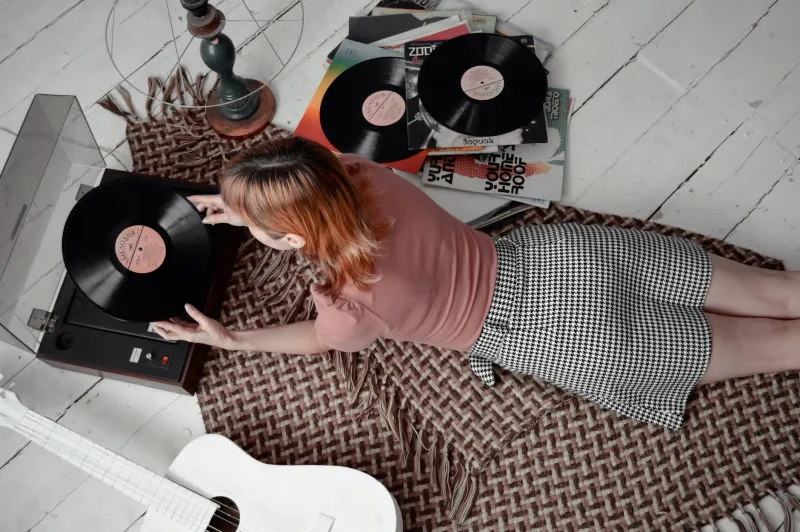
Kayla Brandt is seventeen years old. She has a TikTok account she barely uses, a Spotify login she shares with her mom, and a copy of Waylon Jennings' Honky Tonk Heroes that she found in her grandfather's garage two years ago and hasn't stopped listening to since.
"I put it on kind of as a joke at first," she admits, sitting at a picnic table outside a Southside diner. "Like, 'look at this old record.' And then I actually listened to it. And I couldn't explain it, but it felt more real than anything I'd heard in forever."
Kayla is not alone.
Something's Shifting
Across Jacksonville, a small but growing number of teenagers and young adults are making their way—sometimes accidentally, sometimes deliberately—into classic country music. Not the radio country of the current era. Not the crossover pop that's been wearing denim for the last decade. The real stuff. Hank Williams. Loretta Lynn. Johnny Cash. Merle Haggard. George Jones.
For some of them, the entry point was a grandparent's record collection. For others, it was a late-night YouTube rabbit hole that started somewhere else and ended up at a black-and-white performance clip from the 1960s. For a few, it was walking into one of Jacksonville's classic country bars with an older relative and hearing something come out of the jukebox that stopped them cold.
However they found it, they're not letting go.
"I think we're tired of being told what to feel," says Marcus Webb, a nineteen-year-old from the Northside who plays guitar and has been slowly learning classic country standards for the past eighteen months. "Streaming algorithms decide what you like before you've even heard it. Old country just tells you the truth and lets you figure out the rest yourself."
The Grandfather Effect
A recurring theme in these young fans' stories is the role of an older family member—usually a grandparent, sometimes a parent—who kept the music alive in the household long enough for a younger generation to stumble into it.
Kayla's grandfather, a retired pipefitter named Gerald who has lived in the same house in Mandarin for forty years, has been playing country music on a turntable in his living room her entire life. She grew up hearing it without really hearing it. Then one afternoon she actually listened.
"He sat with me and explained who Waylon was," she says. "Not just the music—the story. The whole outlaw thing, fighting with the labels, doing it his own way. And I thought, that's the most punk rock thing I've ever heard. This guy was doing in 1972 what every independent artist today is trying to do."
Marcus had a similar awakening through his grandmother, who would play Loretta Lynn and Tammy Wynette on Sunday afternoons. "I used to think it was just old people music," he says. "Then one day I actually paid attention to the words. Loretta Lynn was writing about things that were genuinely controversial. She wasn't playing it safe at all. That surprised me."
The Venue Connection
For some young Jacksonville fans, the local honky-tonk scene has been as important as any family connection. A handful of Jacksonville's classic country venues have become unlikely gathering spots for younger listeners who show up curious and leave converted.
Ray Tillman, who owns a Westside honky-tonk, has noticed the change over the past couple of years. "We get younger faces in here now that we didn't used to," he says. "Not a flood of them, but enough to notice. They come in with somebody older usually, but they come back on their own. That tells you something."
What keeps them coming back, by most accounts, is the experience of hearing music in a room full of people who actually care about it. It's different from a streaming queue. It's different from a concert where the artist is playing to an arena. It's intimate and communal in a way that digital music consumption simply isn't.
"When that jukebox plays a Hank Williams song and everyone in the bar goes quiet for a second," says Kayla, "that's not something you get from a playlist. That's people responding to something real. You can feel it."
Rejecting the Algorithm
There's a generational irony at work here that's worth noting. Gen Z and Gen Alpha grew up inside algorithmic systems designed to anticipate and shape their tastes. Streaming platforms, social media feeds, recommendation engines—these tools have been part of their lives since childhood. And some of them have grown deeply suspicious of the result.
"The algorithm gives you more of what you already have," says Marcus. "It doesn't challenge you. It just confirms you. Classic country challenges me constantly. There are songs I don't fully understand yet. Songs that hit different every time you hear them depending on what's going on in your life. That's not something a recommendation engine can engineer."
Kayla frames it in even simpler terms. "The music they push at you now is designed to make you feel a certain way so you'll keep listening. Old country just tells you how somebody felt and lets you have your own reaction. That feels more respectful, honestly."
Something Worth Keeping
None of this means classic country is suddenly going to dominate the youth market. The numbers are small and the trend is niche. But in a city like Jacksonville, where the roots of traditional country music run deep through families and neighborhoods and old honky-tonks that have been holding the line for decades, even a small generational revival carries real weight.
These young fans aren't reclaiming something they lost. They never had it to begin with. What they're doing is finding something that was kept alive for them by people who refused to let it die—grandparents with turntables, venue owners with old jukeboxes, bartenders who know what song a room needs—and deciding it was worth the effort.
"My friends think it's weird that I'm into this," Kayla says, smiling. "But then I play them something and they get quiet. And I know they feel it too. They just don't know what to do with it yet."
Give them time. The music isn't going anywhere.