The Long Education: Jacksonville's Honky-Tonk Veterans Are Teaching the Next Round What Can't Be Found in a Textbook
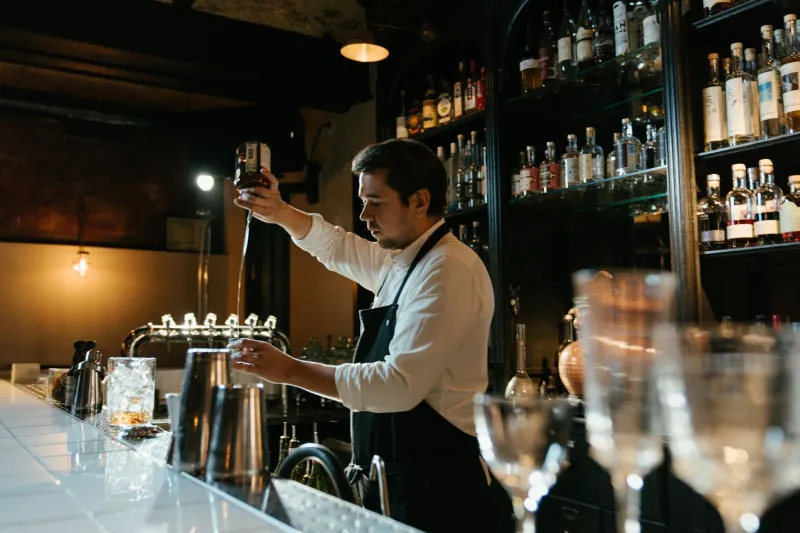
There's no certification program for what Ray Dillard does behind the bar at his regular Friday night shift. No online course covers how to read a room at 9:47 PM when the mood is tipping between loose and lost, or how to know that the next song needs to be something with a steel guitar and a tempo that doesn't rush anybody. Ray learned it the way everyone learns it in Jacksonville's classic country world—by standing next to someone who already knew, watching, asking questions when the moment allowed, and making enough small mistakes that the right instincts eventually took over.
Ray's been behind the stick at the same venue for going on eighteen years. For the last four, he's been teaching a 26-year-old named Marcus everything he knows.
What the Apprenticeship Looks Like
The word "apprenticeship" sounds formal for something that happens mostly in the margins of a busy shift. There's no contract, no syllabus, no graduation. What there is: a consistent presence, a lot of watching, and a mentor who's willing to explain his thinking out loud even when the bar is three-deep and the explanation has to come in pieces over the course of the night.
"I told Marcus early on that the hardest part of this job isn't the drinks," Ray says, wiping down the bar during the quiet hour before doors open. "The hardest part is understanding that the music isn't background. It's the whole point. Everything else we do is in service of what's coming out of those speakers."
That philosophy—music as the primary purpose rather than the atmospheric afterthought—is the foundation of what Jacksonville's classic country venues have always gotten right. And it's what the mentors in this informal network are most deliberately trying to pass on.
Sandra Oaks and the Art of the Jukebox
Sandra Oaks has been managing a classic country venue in Jacksonville for over two decades. She's watched the music industry change in ways that would have seemed impossible when she started, and she's watched a lot of people come through her doors who thought they understood what this kind of bar was about.
Most of them, she says, needed to be taught the same thing: that the jukebox is not a vending machine.
"People think you just stock it and let it run," Sandra explains. "But every song that goes in that box is a decision. You're deciding what kind of night is available to your customers. You're setting the ceiling and the floor. If you don't understand that, you'll fill it with whatever's easy and wonder why nobody's connecting."
Sandra's current mentee is a 23-year-old named Delia, who came to the venue as a cocktail waitress and gradually revealed an ear for music that Sandra recognized immediately. The mentorship that followed was unplanned but inevitable—Sandra started asking Delia's opinion on song choices, explaining her own reasoning, letting Delia make calls and then debriefing afterward.
"She hears things I don't always notice anymore," Sandra admits. "That's part of what I need from her. The exchange goes both ways."
Reading the Room: The Core Skill
If there's a single competency that Jacksonville's honky-tonk mentors return to again and again, it's the ability to read a room—to absorb the collective mood of a crowd and respond to it with the right music at the right moment. It sounds simple. It is not simple.
"You're watching body language, listening to the noise level, paying attention to who's dancing and who's sitting still," says longtime Jacksonville DJ and venue consultant Pete Harmon, who has mentored a half-dozen younger programmers over his career. "You're tracking the energy across the whole room at once, and you're thinking two or three songs ahead. It's like playing chess, except if you make a wrong move, you don't lose a game—you lose the room."
Losing the room, in classic country terms, means watching the connection between the music and the audience dissolve. It's a palpable thing when it happens—the conversations get louder, the attention drifts, people start looking at their phones. Getting the room back once you've lost it is harder than keeping it, which is why the emphasis in Jacksonville's mentorship culture falls so heavily on prevention rather than recovery.
Pete teaches his mentees to look for specific signals: the way a crowd responds to the first four bars of a song, whether the energy in the room rises or settles when the tempo shifts, how the late-night hour changes what people need from the music. "By midnight, a room wants to feel something," he says. "They're past the social part of the evening. They came out for a reason, and if you're doing your job, the music is going to find that reason and speak to it."
What Can't Be Taught—and What Can
Every mentor in Jacksonville's classic country community will tell you the same thing: some of this can be taught, and some of it has to be felt. The catalog knowledge—the deep familiarity with artists, albums, eras, regional styles—can be transferred through deliberate effort. The taste, the instinct, the willingness to trust a gut feeling about what a room needs at a specific moment—that has to develop on its own, through experience and attention.
What the mentors can do is create the conditions for that development. They can put younger people in situations where the instincts have to engage. They can debrief after shifts, pointing out the moments where a different choice might have landed better or where an instinct that looked risky paid off. They can share their own history of mistakes—the songs that cleared the floor, the sets that never found their footing—so that the next generation doesn't have to make every error from scratch.
"I want Marcus to fail in front of me," Ray says, with a grin that makes clear he means it kindly. "Because when he fails in front of me, we can talk about it. And that conversation is worth more than ten nights where everything goes fine."
The Values Underneath the Craft
Beyond the technical skills—the catalog knowledge, the room-reading, the jukebox curation—Jacksonville's honky-tonk mentors are passing on something harder to name: a set of values about what classic country music is for and who it belongs to.
Those values include honesty. They include a respect for the audience that refuses to condescend or coast. They include a commitment to the music itself that doesn't waver when trends push in a different direction. They include the understanding that a classic country venue isn't just a business—it's a community institution, and the people who run it carry a responsibility to the community that chose it.
Delia, Sandra's mentee, puts it plainly: "She's not just teaching me about songs. She's teaching me about what we owe the people who walk through that door."
That's the long education. And Jacksonville, for now, is still giving it.