Digging for Gold: The Jacksonville DJ Who Pulls Forgotten Country Records Out of Estate Sales and Puts Them Back on the Air
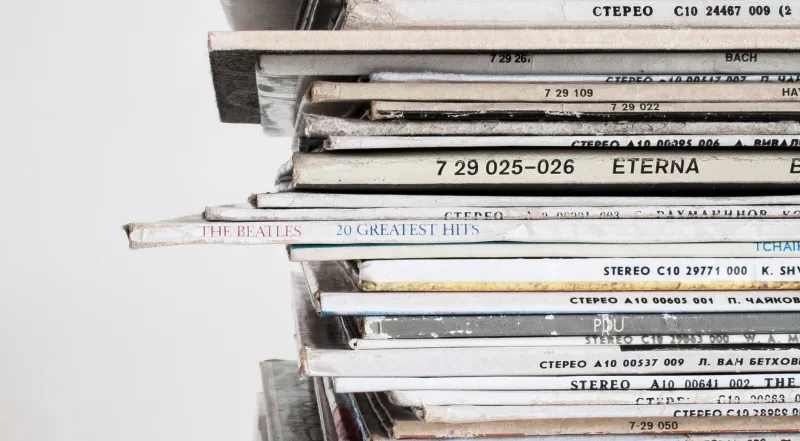
Most people walking through an estate sale in Jacksonville are looking for furniture or old tools. Ray Coltrane is looking for something else entirely—the kind of country record that got pressed in a small run back in 1967 and never made it past regional radio. He finds them, he takes them home, and then he plays them for anyone willing to listen.
Ray has been doing this for the better part of two decades. On Saturday mornings you'll find him at estate sales in Mandarin, Ortega, Arlington, and Riverside, flipping through milk crates and cardboard boxes with the focused calm of someone who has learned to slow down and pay attention. By Saturday night, there's a decent chance something he found that morning will be spinning on air.
The Hunt
"Most people skip right past the records," Ray says, crouching over a crate in the garage of a ranch-style house in the Southside. He's got a cardboard box of 45s in front of him and he's moving through them with practiced speed—glancing, pausing, setting aside, moving on. "They don't know what they're looking at. Or they know what the famous stuff is worth and they're looking for that. I'm not looking for famous."
What Ray is looking for is harder to define. He describes it as a feeling more than a formula. Small labels. Regional pressings. Names that almost rang out—artists who recorded one single, or two, or a full album that got distributed across the Southeast and then quietly disappeared when the label folded or the radio stations changed format.
He holds up a 45 with a faded orange label. The artist's name means nothing to most people. The song title is handwritten in ink over a printed placeholder. "This one's from a studio in Nashville that closed in 1972," he says. "I've never heard this track. Neither has almost anyone else alive. That's the whole point."
Ray started collecting as a teenager, back when his grandmother's house in Springfield was full of records she'd accumulated over thirty years of buying them at dime stores and listening to AM radio. She had Hank Snow. She had Faron Young. She had artists whose names Ray didn't recognize even then, and that unfamiliarity is what hooked him. He wanted to know who they were and why they'd disappeared.
Bringing Them Back to Life
Ray's collection now occupies a dedicated room in his house in Avondale—floor-to-ceiling shelving, organized by era and then loosely by geography. He estimates he has somewhere between four and five thousand records, though he admits he's stopped counting. A meaningful portion of them are what he calls "true obscurities"—recordings that don't appear in major discographies, that have no Wikipedia entry, that exist in the world in maybe a few hundred physical copies and nowhere else.
His radio work gives these records a second life. Ray hosts a weekend program on a local station where he builds sets around themes—forgotten female vocalists of the 1960s, regional country from the Florida Panhandle, studio musicians who played on famous sessions and then released their own material to minimal fanfare. He writes his own liner-note style introductions for each track, researching the artists through old music trade publications, regional newspaper archives, and occasional phone calls with people who actually remember.
"The research is half the pleasure," he says. "Sometimes I'll find a record and spend three weeks trying to figure out who the woman singing on it actually was. And then I find her—or I find her granddaughter—and I get to tell them that somebody's still playing this music. That it still matters to somebody."
Those conversations, Ray says, are some of the most meaningful of his life.
Why the Forgotten Ones Hit Harder
There's a reasonable question buried in all of this: why should anyone care about music that didn't make it? If these songs were that good, wouldn't they have succeeded?
Ray has heard this argument and he rejects it completely.
"The music business has always been about more than quality," he says, pulling a record from a shelf and turning it over to look at the B-side. "Timing matters. Connections matter. Money matters. Geography matters. There were artists recording in the 1950s and 1960s who were every bit as talented as the people who became famous, and they didn't make it because they were in the wrong city or they signed with the wrong label or they had a single that came out the same week as something bigger and got buried."
He's right about that. Country music history is full of near-misses and might-have-beens. The artists who broke through to national fame often did so on the strength of factors that had very little to do with raw talent. The ones who didn't break through left behind music that's been sitting in garages and attics ever since, waiting for someone like Ray to find it.
And when he plays these tracks on air, something interesting happens. Listeners call in. They recognize songs they haven't thought about in decades. They remember where they were when they first heard a particular melody. Or they've never heard the song before in their lives and they respond to it immediately, without context or nostalgia, because the music itself is that good.
"That's when I know I've found something real," Ray says. "When somebody calls in and says, 'I don't know who that is, but play it again.' That's the whole game."
Jacksonville's Role in Keeping It Alive
Ray isn't operating in a vacuum. Jacksonville has a community of collectors, music historians, and dedicated listeners who share his commitment to the deep catalog of classic country. He trades records with other collectors, shares research with local musicians who are building their own repertoires around obscure material, and occasionally brings his finds to local venues where he'll spin records between live sets.
The response at those events, he says, consistently surprises people who expect a room full of older listeners nodding along to familiar hits.
"I'll play something nobody's ever heard, and the room gets quiet in that particular way," he says. "Not bored quiet. Listening quiet. That's the sound of people actually paying attention to music, which is rarer than it used to be."
He's planning a series of listening events at a few Jacksonville venues later this year—evenings built around specific themes from his collection, with printed notes and a Q&A component for people who want to know more about what they're hearing. The response to early announcements has been, in his word, "surprising."
For Ray Coltrane, the mission is simple even if the work is painstaking: the music exists. It deserves to be heard. And Jacksonville, with its deep roots in the country tradition and its stubborn resistance to letting the old ways disappear entirely, is exactly the right place to hear it.
"These records found their way to me for a reason," he says, setting a newly discovered 45 carefully on a felt-lined turntable. "I'm just doing my part."
The needle drops. The room fills with a voice nobody has heard in fifty years. It sounds like coming home.