Hold the Line or Open the Door: The Hard Choices Facing Jacksonville's Classic Country Venue Owners
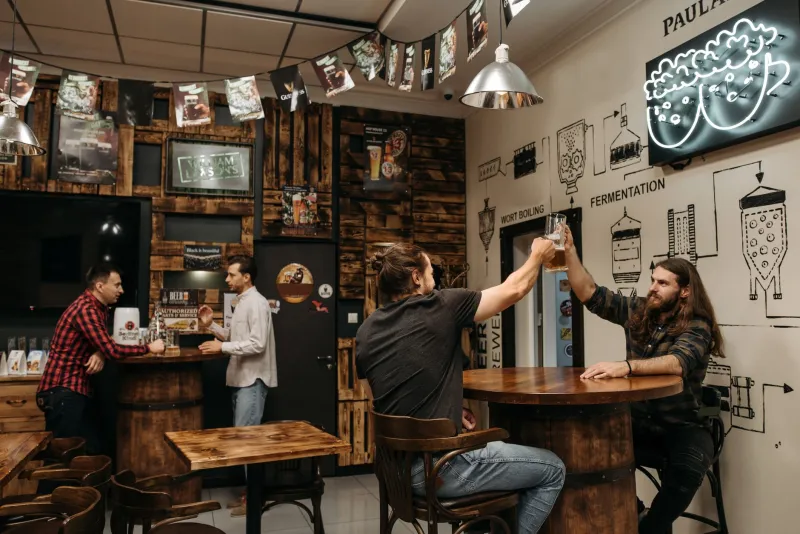
There's a version of this story that's simple: a bar owner who loves classic country music keeps a classic country bar. Plays the old stuff. Refuses to compromise. End of story.
The reality is considerably messier, and the people actually living it will tell you so.
Running a venue dedicated to authentic country music in 2025 means waking up every morning inside a tension that doesn't resolve. You've got a responsibility to something you believe in — a sound, a tradition, a way of doing things — and you've got a responsibility to a mortgage, a staff, and a liquor license that requires actual human beings to show up and spend actual money. Those two responsibilities don't always point in the same direction.
We spent time talking with several Jacksonville venue operators about where they draw their lines, why they draw them there, and what it costs them to hold.
The First Concession Nobody Wants to Talk About
Ask a classic country bar owner about compromise and most of them will give you the party line first: we don't compromise on the music. And then, if you wait long enough, the real conversation starts.
"I put a big screen up for football," admitted one Westside bar owner who asked not to be named, partially because he knew how it would sound to his regulars. "I fought it for years. Told myself it would change the room. And it did change the room — it brought in twenty more people on Sundays who then came back on Friday nights and heard Merle Haggard for the first time. Some of them are now regulars."
He doesn't see it as a betrayal. He sees it as a door. "If the music is good enough — and it is — it does its own work once people are in the room. My job is to get them in the room."
Not everyone sees it that way. A different owner, running a small venue in Arlington, pulled the TVs out three years ago and has never looked back. "The moment you put a screen on the wall, the screen becomes the thing people are looking at. I'm not running a sports bar that happens to play country. I'm running a country bar. Those are different places."
Both of them are right, and they'll both tell you the other guy is wrong.
The Booking Question
Original programming is where the philosophical debates get sharpest. Most classic country venues in Jacksonville are built around recorded music — jukeboxes, DJs, carefully curated playlists. But live music is expensive, and live music that stays true to the classic country aesthetic is even harder to source.
The dilemma: do you book a local act that plays mostly original music with a classic country influence, or do you hold out for tribute acts and cover bands that stay strictly in the canon? And what happens when a cover band starts slipping in newer material because their set list is otherwise getting stale?
"I had a conversation with a band last year that I book pretty regularly," said one venue operator near the Northside. "Good group, really good. They wanted to add a couple of Zac Brown Band songs to the rotation. And I had to sit there and explain why that wasn't going to work for us, even though I personally don't have anything against Zac Brown Band."
He held the line. The band understood, mostly. They still play the venue.
"But I know I'm asking something of them," he said. "I'm asking them to stay in a box that helps me but maybe limits them. That's a real thing to ask."
Survival Math
The economics of running a small music venue are brutal under the best circumstances. Rising insurance costs, unpredictable alcohol sales, the increasing difficulty of finding reliable staff who know anything about the music — these aren't abstract problems. They're monthly line items.
Some owners have found creative solutions that don't require abandoning the mission. Private event rentals on off-nights. Vinyl swap meets. Ticketed listening events built around specific artists or eras. One venue has started doing classic country trivia nights that pull in a surprisingly young crowd.
"I'm not going to pretend any of that is as pure as just opening the doors and letting the music play," said the owner of one such venue. "But pure doesn't pay the property tax. I've got to be a little creative if I want to still be here in five years."
The calculus is always the same: what can I add without taking anything essential away?
The Non-Negotiables
For all the flexibility on the margins, every venue owner we talked to had at least one thing they wouldn't budge on. The specifics varied, but the conviction was universal.
For some, it's the music itself — no bro-country, no pop-country, no exceptions regardless of customer requests. For others, it's the physical environment: no flat-screen menus, no QR code ordering systems, nothing that makes the room feel like a chain restaurant that happens to have a stage.
One owner — a woman who's been running her bar for over two decades — was the most direct about where her line sits. "I will never put a DJ booth where my stage is. I will never replace my jukebox with a tablet. And I will never, ever apologize to a customer for playing a song they don't recognize. If they don't recognize it, that's information about them, not about the song."
She said it without heat, the way you say something you've said a hundred times and still mean completely.
What Survival Actually Looks Like
The venues that have lasted longest in Jacksonville share something beyond stubbornness. They have a clear sense of what they are, and that clarity — communicated through every physical and musical choice in the room — attracts people who are looking for exactly that thing.
The owners who are struggling tend to be the ones caught in the middle, trying to be everything to everyone and ending up as nothing in particular to nobody.
Classic country music, at its core, was never about appealing to the widest possible audience. It was about speaking precisely and honestly to the people who needed to hear it. The bars that operate by that same principle — specific, honest, unashamed — seem to find their people.
It's not a business model you'll find in a textbook. But in Jacksonville, it keeps working.