Salt Air and Steel Strings: Why Jacksonville Became Classic Country's Most Unlikely Stronghold
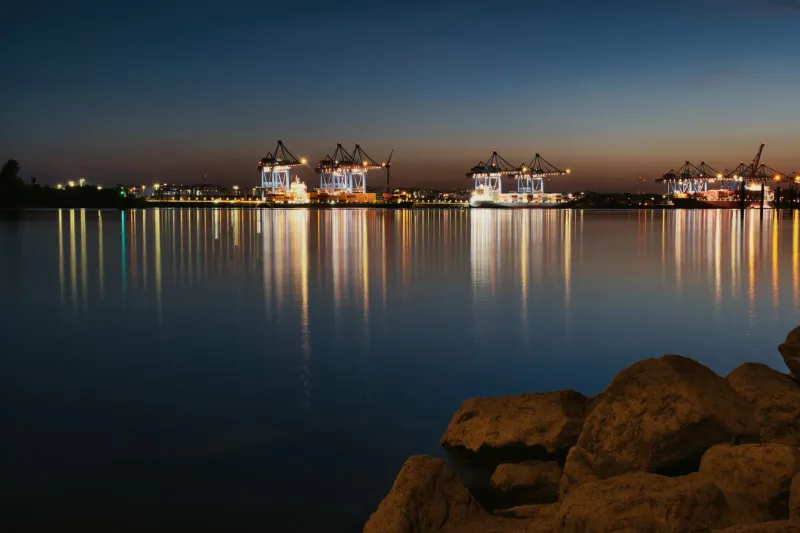
Pull up a map and find Jacksonville. You're looking at a city pressed up against the Atlantic, sitting at the top of Florida where the state hasn't quite decided if it wants to be the South or something else entirely. It's not Nashville. It's not Austin. It's not Bakersfield. By most industry logic, Jacksonville should have nothing to do with classic country music beyond the occasional nostalgia playlist.
And yet here we are.
Something happened in this city — gradually, stubbornly, without a press release — that turned Jacksonville into one of the most reliable homes for authentic country music still breathing in America. It didn't happen because a record label planted a flag here. It happened because the city itself was already built for it.
The Working-Class Foundation Nobody Talks About
Jacksonville grew up on labor. The port, the military bases, the trades — this has always been a city where people clock in, sweat through a shift, and need somewhere honest to land when the day ends. That's not a demographic detail. That's a cultural blueprint.
Classic country music was built by and for exactly those people. When Merle Haggard sang about working men and hard times, he wasn't making a stylistic choice — he was reporting. When Loretta Lynn wrote about the realities of a woman's life in working America, she was filing a first-person account. Jacksonville's workforce recognized that honesty on a cellular level, and the connection stuck.
The bars that grew up around those working neighborhoods weren't chasing trends. They were serving regulars who knew what they wanted: something real. A jukebox stocked with Conway Twitty or George Jones wasn't a curatorial statement in those rooms — it was just Tuesday night.
Distance as a Gift
Here's the thing about being far from Nashville: you stop caring what Nashville thinks.
That sounds like a small thing until you realize how much of the country music industry's identity crisis over the last thirty years has been driven by proximity to the machine — labels, consultants, radio conglomerates, and trend-chasers all stacked on top of each other in a few zip codes, feeding each other the same bad ideas about what country music needs to be to survive.
Jacksonville never got that memo. Or more accurately, Jacksonville got the memo, read it, and put it face-down on the bar next to an empty Budweiser.
The venues here didn't have to answer to anyone who cared about streaming metrics or crossover demographics. They answered to the guy on the third barstool who'd been coming in every Friday since 1987 and knew the difference between a real crying song and a produced facsimile of one. That accountability — direct, unmediated, and occasionally loud — kept the music honest in a way no industry standard ever could.
The Coastal Paradox
You'd think the beach would work against classic country. Coastal culture tends toward the breezy, the sunny, the kind of music that doesn't ask too much of you emotionally. And sure, Jacksonville has that. The city contains multitudes.
But there's another coastal reality that doesn't make the tourism brochures: the loneliness of water, the weight of distance, the way a big horizon can make a person feel very small and very far from wherever they came from. Sailors know it. Fishermen know it. Anyone who's ever stood at the edge of something vast and felt the particular ache of being human knows it.
Classic country music speaks directly to that ache. It always has. The themes of loss, displacement, longing, and hard-won resilience aren't just rural concerns — they're universal ones that happen to wear work boots. Jacksonville's coastal geography didn't push the city away from country music. In some strange way, it created a different on-ramp to the same emotional territory.
Migration and Memory
Jacksonville has also been a landing spot for generations of people moving down from Georgia, the Carolinas, Tennessee, and Alabama. They brought their music with them the same way they brought their recipes and their church habits — not as a statement, just as part of who they were.
Those transplants didn't abandon classic country when they crossed the state line. They found each other in bars and at flea markets and at the record shops that used to line the side streets before streaming made them extinct. They built informal networks of people who remembered what country music sounded like before it got complicated.
That living memory has a gravitational pull. It draws in younger people who stumble into a honky-tonk and hear something that sounds like it was recorded before music learned to be afraid of itself. And it holds.
What Jacksonville Protects
None of this happened by design, and that might be exactly why it works. Cities that consciously position themselves as music towns sometimes end up more interested in the branding than the music. Jacksonville never tried to be a country music destination. It just kept being a place where country music made sense.
The venues here aren't museums. They're not performing preservation for the sake of an identity. They're just rooms where the music still fits the people in them, where a Hank Williams record can still quiet a bar down to something close to reverence, where nobody has to explain why they prefer a steel guitar to a synthesizer.
That's not a small thing. In 2025, when authentic country music is an endangered species in most of the places that used to produce it, a city that never stopped believing in the real thing is worth paying attention to.
Jacksonville didn't save classic country. Classic country found Jacksonville — and apparently, it liked what it saw well enough to stay.