Reading the Room: The Jacksonville Bartender Who Knows What Song You Need Before You Do
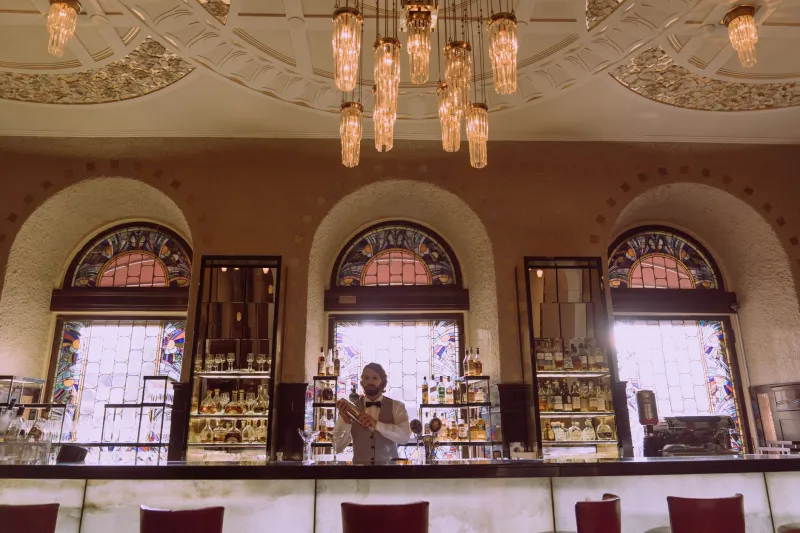
Donna Harwell slides a Budweiser across the bar without looking up. She's already watching the door. A guy in a work shirt walks in, shoulders slumped, jaw set like he's been chewing on something bad all day. Donna gives it about forty-five seconds, then drifts toward the jukebox in the corner—the old Rowe AMI that's been in this spot since before she started working here—and punches in a number without hesitating.
Merle Haggard's If We Make It Through December fills the room.
The guy in the work shirt exhales. His shoulders drop about two inches. He doesn't say a word, but he doesn't have to.
"That's the job," Donna says later, wiping down the bar. "Not the pouring. Not the small talk. The music is the job."
Twenty-Three Years of Listening
Donna has been behind the stick at Sawgrass Saloon on the Westside since 2001. Before that, she spent four years at a place off Blanding Boulevard that doesn't exist anymore, and two years before that at a roadhouse near Orange Park that burned down in 2003. She's been doing this long enough to remember when people actually argued about which Waylon album was better instead of whether Waylon was even country.
She's not a DJ. She's not a music director. She doesn't have a playlist, a spreadsheet, or a subscription to anything. What she has is a kind of accumulated human intelligence that would take a Silicon Valley engineer about ten lifetimes to reverse-engineer, and even then they'd probably get it wrong.
"Spotify knows what you listened to last Tuesday," she says. "I know what your face looks like when your marriage is falling apart. Those aren't the same thing."
She's not wrong. The algorithms know your history. Donna knows your now.
The Science of the Gut
Ask Donna to explain how she does it and she'll give you a look like you just asked her how she breathes. But push her a little and she'll start breaking it down in ways that are surprisingly precise.
It starts with time of day. Early evening drinkers are different from late-night drinkers. The after-work crowd wants something that validates their exhaustion—Haggard, early Conway Twitty, maybe some Buck Owens if the mood is light enough. The late crowd, the ones who've been there long enough to lose track of their second drink, they want something that goes deeper. That's when she reaches for George Jones. That's when Tammy Wynette makes sense.
Then there's the weather. "Rainy nights call for sad songs, but not too sad," she explains. "You want something that feels like sitting on a porch, not something that makes a person feel worse than they already do. There's a difference between lonely and hopeless, and you've got to know which one the room is feeling."
She also watches table dynamics. Couples on what looks like a first date get something uptempo and warm—maybe a Statler Brothers cut, something with a little humor in it. Groups of women out celebrating something get a little Dolly. Old-timers at the bar who've known each other for decades get whatever they used to listen to back when they were young and stupid, and Donna usually knows what that is because she's been serving them long enough to have heard the stories.
What the Algorithm Misses
There's a fundamental flaw in the way streaming services approach music, and Donna identifies it without using a single technical term.
"They think music is about what you like," she says. "But half the time, music is about what you need. And what you need changes every fifteen minutes depending on what just happened to you."
A data model can tell you that a user who listened to Hank Williams three times last week has a 73 percent probability of engaging positively with a Don Williams recommendation. What it cannot tell you is that the woman sitting at the end of the bar just got a text message that changed her entire night, and what she needs right now is not a recommendation based on listening history—she needs I Can't Stop Loving You by Don Gibson, and she needs it in the next four minutes before she makes a decision she'll regret.
Donna caught that one last spring. She won't say how she knew. "You just know," she says.
The Jukebox as a Living Thing
The Rowe AMI in the corner isn't just furniture. Donna treats it like a co-worker. She's been the one lobbying ownership to keep the physical machine instead of switching to a touchscreen digital unit, and so far she's winning that argument.
"A digital jukebox lets any drunk in the bar queue up whatever they want and blow up the whole mood," she says. "This one, I've got eyes on it. I can redirect. I can suggest. I can make a case."
She's also the one who curates what goes in it. Every few months she sits down with a stack of 45s and 7-inch singles she's collected from estate sales and used record shops around Jacksonville and makes the case for swapping out something that isn't working for something that will. It's an ongoing conversation between her and the room, conducted entirely in music.
Regulars have started trusting her instincts so completely that some of them stopped feeding the machine altogether. They just let Donna run it. "That's the highest compliment I ever got," she says.
A Skill That Can't Be Downloaded
There's no app for what Donna does. There's no course, no certification, no tutorial video. What she has was built over two decades of showing up, paying attention, and caring enough about the people in her bar to treat the music as something more than background noise.
In Jacksonville's classic country scene, that kind of knowledge is currency. The venues that have it—the ones with a Donna behind the bar, or someone like her—have something that no streaming platform can replicate and no algorithm can approximate.
"Music is supposed to find you," she says, stacking glasses. "Not the other way around."
The guy in the work shirt is on his second beer now. He's talking to the man next to him. The song has moved on to something a little warmer, a little more hopeful. Donna didn't announce the change. She just made it.
That's the job.