Neon Schoolhouse: Inside Jacksonville's Honky-Tonk Mentorship Movement
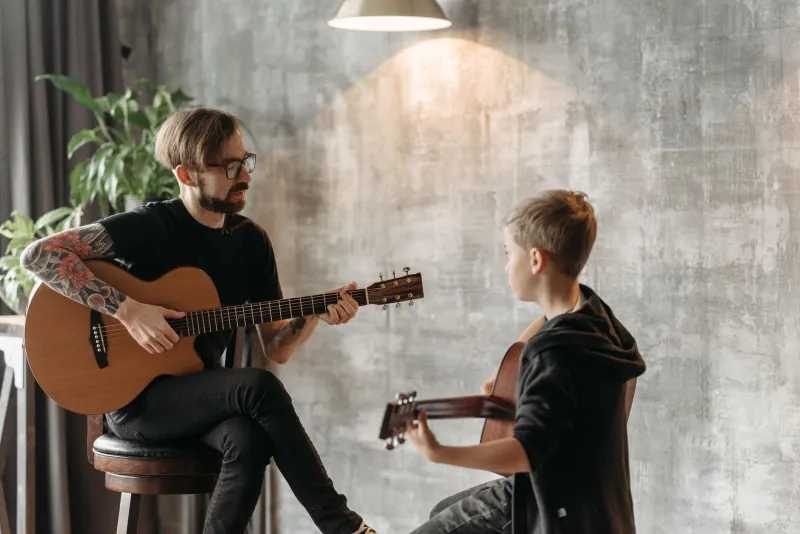
There's no syllabus. No tuition. No formal enrollment. But walk into the right Jacksonville bar on a Thursday night, and you'll find an education happening that no music conservatory could ever fully replicate.
Across the classic country venues scattered through this city — from the well-worn stages on the Westside to the roadhouse rooms tucked out toward the county line — something genuinely remarkable is unfolding. Experienced musicians, some of them pushing their seventies, are pulling teenagers and twenty-somethings aside between sets, handing over steel guitars, and doing what teachers have always done best: showing, not just telling.
It's quiet. It's informal. And it might be one of the most important things happening in Jacksonville country music right now.
The Classroom Nobody Talks About
Ask any veteran player in this town how they learned to play, and the answer is almost never "music school." It's usually some version of the same story — they hung around older musicians long enough that the knowledge just sort of soaked in. They watched hands on fretboards. They listened to stories about why a particular lick worked in a particular song. They absorbed things that can't be written down in a chord chart.
That tradition didn't die. It just moved inside, under the neon.
Bar owners and bandleaders across Jacksonville have started making deliberate space for younger players to sit in, shadow seasoned musicians, and get their hands on instruments they'd otherwise never touch. Steel guitar, fiddle, upright bass — the instruments that define classic country's sound but rarely show up in bedroom YouTube tutorials — are being passed around like heirlooms at a family reunion.
"You can watch a video a thousand times and still not feel it," says one longtime Jacksonville steel player who's been performing on local stages for nearly four decades. "But if somebody puts the bar on your finger and shows you how the pedal changes the note while you're actually hearing it through the PA, something clicks. That's the moment."
That moment is happening a lot more often these days.
More Than Notes — It's the Stories
What makes these honky-tonk mentorships different from a conventional music lesson isn't just the hands-on playing. It's the context. The history. The why behind the what.
When a veteran musician teaches a younger player a Merle Haggard song, they're not just walking through the chord progression. They're explaining what Haggard meant when he wrote it, what was happening in the country at the time, why the phrasing matters, and what gets lost when you rush the tempo. The song becomes a doorway into a whole world of cultural and musical understanding.
Jacksonville's classic country venues serve as living archives in this way. The walls of these places hold decades of memory — photographs of performers who came through, stories of legendary nights, musical lineages that stretch back to the earliest days of honky-tonk and Western swing. A young player walking into one of these rooms isn't just getting a gig or a jam session. They're stepping into a library.
"These kids come in thinking they know classic country because they've heard it on a playlist," one longtime Jacksonville bandleader explains. "But when you sit down with them and start talking about where those songs came from — the heartbreak, the hard times, the specific places and people that inspired them — their whole face changes. They start to understand what they're actually playing."
The Instruments That Almost Got Left Behind
One of the most urgent aspects of this mentorship movement is the preservation of instrumental knowledge that's genuinely at risk of disappearing.
Pedal steel guitar is perhaps the most striking example. It's the instrument most closely associated with classic country's emotional core — that crying, singing, bending tone that makes a good country ballad feel like it's reaching right into your chest. But it's also one of the most complex and technically demanding instruments in any genre, with a learning curve steep enough to discourage most beginners.
In Jacksonville, a small but committed group of steel players has made it their personal mission to keep that knowledge in circulation. They're inviting younger musicians to handle the instrument, demystifying its mechanics, and offering informal lessons in bar back rooms and parking lots after closing time. The goal isn't to manufacture carbon copies of themselves. It's to ensure that when they're gone, the instrument doesn't go with them.
Fiddle players, upright bassists, and traditional lead guitarists are doing much the same thing. The informal network is loose but real — players recommending other players, bar owners making introductions, jam sessions structured specifically to give less experienced musicians time in the spotlight under the watchful eye of someone who's been doing it for decades.
Why the Bar Is the Right Place for This
You might wonder why a music venue is doing what music schools should be doing. The answer is partly practical and partly philosophical.
Practically speaking, a bar is where the music lives. It's where the pressure is real, the audience is honest, and the feedback is immediate. A young player who stumbles through a steel lick in a rehearsal room learns something. A young player who stumbles through that same lick in front of a Friday night crowd learns something they won't forget.
Philosophically, classic country has always been a music of community and oral tradition. It was never meant to be learned from a textbook. It was meant to be caught — passed from one person to another through proximity, repetition, and shared experience. The honky-tonk is the natural habitat of that transmission. Always has been.
Jacksonville's bar owners seem to understand this instinctively. Several venues have started hosting early-evening "mentorship sets" — shorter performances before the main show where veteran musicians play alongside younger ones, explicitly framing the experience as educational. It's not advertised loudly. But word gets around.
What's at Stake
The stakes here aren't abstract. Classic country — real classic country, with its specific instrumental vocabulary, its storytelling traditions, its deep emotional honesty — is not guaranteed to survive simply because people love it. It survives because people actively carry it forward. Because somebody teaches somebody else how to make a steel guitar cry, and then that person teaches somebody else.
Jacksonville has always been a city that took this music seriously. The honky-tonks here weren't just entertainment venues — they were community institutions. And the mentorship culture now growing inside them is an extension of that same commitment.
The next generation of Jacksonville country musicians isn't learning this music in a classroom. They're learning it the way it was always meant to be learned — under neon lights, with calluses forming on their fingers, surrounded by people who love the music enough to give it away.
That's not just a local story. That's how classic country stays alive.